
Technical Resources
Beamsplitter Manufacturer China
When looking for a beamsplitter manufacturer China, the most important question is not only whether the supplier can provide a standard beamsplitter. The real question is whether the supplier can match the beamsplitter design to your wavelength range, splitting ratio, polarization state, angle of incidence, substrate, coating, tolerance, and working environment.
A beamsplitter may look like a simple optical component, but in imaging, laser, sensing, fluorescence, interferometry, and measurement systems, small specification errors can affect signal balance, alignment, transmission, reflection, ghost images, or measurement repeatability. For engineering and procurement teams, the best approach is to confirm the optical design requirements first, then work with a manufacturer that can review drawings, samples, coating needs, and application conditions before production.
What Is a Beamsplitter?
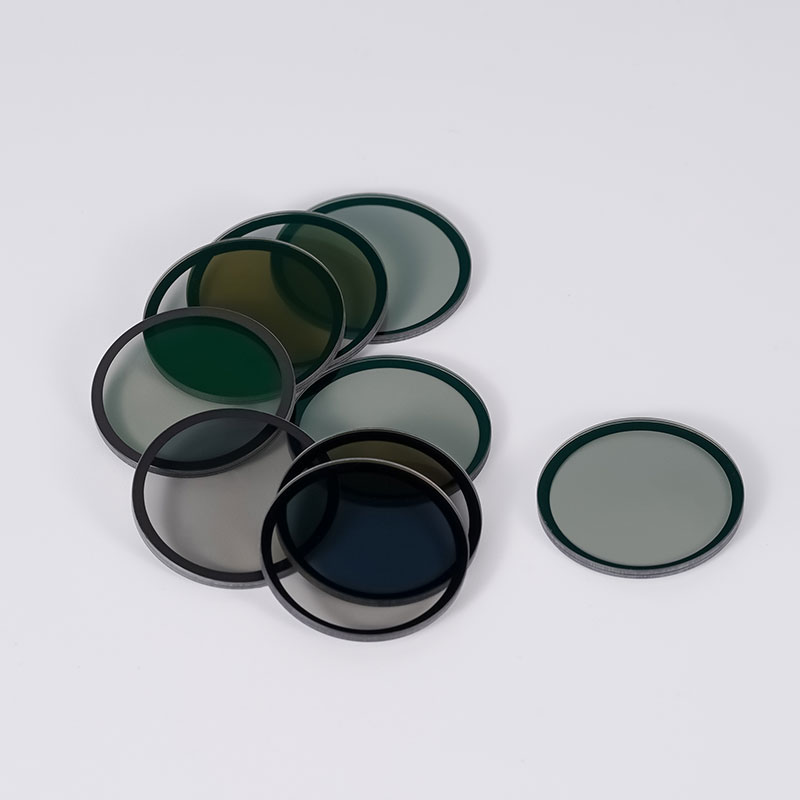
A beamsplitter is an optical component designed to divide an incident light beam into two or more paths. One part of the light is transmitted, while another part is reflected or redirected.
In practical optical systems, beamsplitters are used to:
- Split light into different optical paths.
- Combine or separate optical signals.
- Direct illumination and detection paths.
- Balance signal intensity between channels.
- Support imaging, fluorescence, laser measurement, and interferometric layouts.
The splitting ratio can be equal, such as 50:50, or asymmetric, such as 40:60, 30:70, or other ratios depending on the system design. The actual ratio should be confirmed based on wavelength, polarization, angle of incidence, coating design, and measurement method.

Why Buyers Search for a Beamsplitter Manufacturer China
Many buyers search for a beamsplitter manufacturer China because they need more than an off-the-shelf optical component. They may have a drawing, a prototype, a sample, or a system requirement that needs custom optical manufacturing.
Typical buyers include:
- Optical engineers developing imaging systems.
- Procurement managers sourcing precision optical components.
- Machine vision integrators building inspection systems.
- Laser equipment manufacturers requiring controlled beam splitting.
- Medical and laboratory instrument developers.
- Fluorescence detection and spectroscopy equipment teams.
- LiDAR and sensing system designers.
- Optical component distributors looking for repeatable supply.
For these users, price is only one part of the decision. More important questions include whether the manufacturer understands optical tolerances, coating behavior, wavelength matching, environmental stability, sample verification, and repeatability across batches.
Key Specifications to Confirm Before Ordering a Beamsplitter
Before selecting a beamsplitter, engineers should avoid specifying only the size and splitting ratio. A reliable specification should include both optical and mechanical requirements.
| Specification | Why It Matters | What to Confirm |
|---|---|---|
| Splitting ratio | Determines how much light is transmitted and reflected | 50:50, 40:60, 30:70, or custom ratio |
| Wavelength range | Coating performance depends strongly on wavelength | UV, visible, NIR, IR, or a defined wavelength band |
| Polarization sensitivity | Some systems require low difference between s- and p-polarization | Non-polarizing or polarization-specific design |
| Angle of incidence | Reflection and transmission change with angle | Common AOI or custom system angle |
| Substrate material | Affects transmission, thermal behavior, and durability | Optical glass, fused silica, or other material |
| Surface quality | Impacts scattering, image quality, and laser performance | Scratch-dig or other surface requirement |
| Flatness and wavefront | Important for imaging, interferometry, and beam quality | Required flatness or transmitted wavefront error |
| Coating design | Controls reflection, transmission, blocking, and durability | Dielectric, metallic, dichroic, or custom coating |
| Clear aperture | Affects usable optical area | Beam size and mechanical mount requirement |
| Environmental conditions | Affects long-term stability | Temperature, humidity, cleaning, vibration, or sealing needs |
| Quantity and tolerance | Affects production method and inspection plan | Prototype, small batch, or production volume |
For wavelength-sensitive systems, related components such as custom optical filters, narrow bandpass filters, optical mirrors, and optical windows may also need to be reviewed as part of the full optical path.
Plate Beamsplitter vs Cube Beamsplitter
One of the first design decisions is whether to use a plate beamsplitter or a cube beamsplitter. Both can divide light, but they behave differently in real systems.
| Type | Structure | Typical Advantages | Possible Considerations | Common Applications |
|---|---|---|---|---|
| Plate beamsplitter | Flat optical plate with coating | Thin, lightweight, suitable for compact optical paths | May introduce beam displacement or ghost reflection if not designed properly | Laser monitoring, imaging paths, compact instruments |
| Cube beamsplitter | Two prisms assembled together with internal coating | Easier mechanical alignment, compact beam geometry | Larger and heavier than a plate; bonding and coating design matter | Imaging, microscopy, laboratory instruments |
| Non-polarizing beamsplitter | Designed to reduce polarization dependence | Useful when polarization state should remain balanced | Performance depends on wavelength and AOI | Laser systems, broadband optical instruments |
| Polarizing beamsplitter | Separates light by polarization | Useful for polarization control | Requires clear polarization requirements | Polarization imaging, optical measurement |
| Dichroic beamsplitter | Separates wavelengths rather than only intensity | Useful for multi-wavelength systems | Requires precise wavelength bands and transition zones | Fluorescence, spectroscopy, color separation |
There is no universal “best” option. The correct choice depends on wavelength, beam size, polarization state, mechanical layout, tolerance, and whether the component is used for imaging, sensing, illumination, or measurement.
How Wavelength Range Affects Beamsplitter Design
Wavelength is one of the most important parameters when selecting a beamsplitter. A beamsplitter designed for visible light may not perform correctly in the near-infrared or ultraviolet range. Similarly, a beamsplitter optimized for one laser wavelength may not maintain the same splitting ratio across a broad spectrum.
Engineers should define:
- Operating wavelength or wavelength range.
- Required transmission and reflection ratio.
- Whether the ratio must remain stable across the full band.
- Whether blocking or wavelength separation is required.
- Whether other components such as bandpass filters or infrared filters are used in the same system.
For fluorescence systems, the beamsplitter may need to work together with excitation filters, emission filters, and dichroic optics. For laser systems, the coating should be evaluated based on wavelength, angle, power level, beam quality, and safety requirements.
Coating Design: The Core of Beamsplitter Performance
The coating is often the most important part of a beamsplitter. It determines how much light is reflected, how much is transmitted, how polarization behaves, and how stable the component remains under operating conditions.
Common coating-related questions include:
- Is the beamsplitter designed for a single wavelength or a broad band?
- Is the coating dielectric, metallic, or dichroic?
- Is low absorption important for the system?
- Is polarization balance required?
- What AOI is used in the optical path?
- Does the system require high durability or environmental resistance?
- Will the component be cleaned, mounted, sealed, or exposed to humidity?
For procurement, “coated beamsplitter” is not enough as a specification. The supplier should understand the target transmission/reflection ratio, wavelength range, AOI, substrate, tolerance, and application background before confirming manufacturability.
Common Beamsplitter Applications
A custom beamsplitter manufacturer should understand the application context, because the same 50:50 ratio can mean different things in different systems.
| Application | Beamsplitter Role | Important Selection Factors |
|---|---|---|
| Machine vision | Separates illumination and imaging paths | Low ghosting, stable transmission, mechanical fit |
| Fluorescence detection | Directs excitation and emission paths | Wavelength separation, coating edge, blocking requirements |
| Laser measurement | Divides a laser beam for monitoring or reference | AOI, polarization, laser wavelength, power handling |
| Interferometry | Splits and recombines coherent light | Wavefront quality, phase behavior, coating uniformity |
| Medical instruments | Supports detection, imaging, or illumination paths | System validation, optical stability, application-specific testing |
| LiDAR and sensing | Splits or redirects optical signals | Wavelength, reflection, transmission, environmental reliability |
| Laboratory instruments | Supports flexible optical layouts | Custom size, ratio, substrate, and coating options |
For high-requirement applications such as medical devices, laser systems, automotive sensing, aerospace, or regulated instruments, specifications should be confirmed according to the actual system design, test conditions, and compliance requirements.
How to Evaluate a Beamsplitter Manufacturer China
When evaluating a beamsplitter manufacturer China, buyers should focus on engineering communication and process capability, not only catalog availability.
A qualified supplier should be able to discuss:
- Drawing review and tolerance feasibility.
- Coating design requirements.
- Substrate material selection.
- Splitting ratio and wavelength range.
- AOI and polarization behavior.
- Prototype or sample evaluation.
- Batch consistency and inspection method.
- Packaging, cleaning, and handling requirements.
- Quantity, lead time, and repeat order support.
If the beamsplitter is part of a larger optical system, it is also helpful to review related optical prisms, optical lenses, optical mirrors, and optical windows at the same time. This helps prevent mismatch between components in the final optical path.
Practical Selection Checklist
Before requesting a custom beamsplitter quote, prepare the following information:
- Application background
Explain whether the beamsplitter will be used in imaging, laser, sensing, fluorescence, interferometry, laboratory instrumentation, or another optical system. - Wavelength requirement
Provide the operating wavelength or wavelength range. If multiple wavelengths are involved, list each one clearly. - Splitting ratio
Specify the required transmission/reflection ratio, such as 50:50, 40:60, or a custom ratio. If tolerance is important, define the acceptable range. - Type preference
State whether you need a plate beamsplitter, cube beamsplitter, non-polarizing beamsplitter, polarizing beamsplitter, or dichroic beamsplitter. - Angle of incidence
Provide the working AOI in the system. If the angle is not fixed yet, explain the mechanical layout. - Substrate material
Mention preferred material if already known. If not, describe the wavelength range, size, thermal conditions, and mechanical requirements. - Optical tolerance
Define surface quality, flatness, wavefront, parallelism, clear aperture, and dimensional tolerance if these are critical. - Coating requirement
Specify whether the coating needs low absorption, broadband performance, wavelength separation, polarization control, or environmental durability. - Quantity and project stage
Tell the supplier whether the project is for R&D samples, pilot production, or regular batch supply. - Drawing or sample
If available, provide drawings, CAD files, existing samples, optical path diagrams, or previous measurement requirements.
Common Mistakes When Buying Beamsplitters
Mistake 1: Only specifying the ratio
A request such as “50:50 beamsplitter” is incomplete. The same ratio can perform differently depending on wavelength, AOI, polarization, and coating design.
Mistake 2: Ignoring polarization
In many optical systems, s- and p-polarization do not behave identically. If polarization sensitivity matters, it should be specified early.
Mistake 3: Assuming visible-light performance applies to infrared or UV
Coatings and substrates are wavelength-dependent. A beamsplitter suitable for visible light may not be suitable for infrared, ultraviolet, or laser-specific designs.
Mistake 4: Not considering ghost images or secondary reflections
In imaging systems, unwanted reflections can reduce contrast or create ghost images. Component type, wedge, coating, and mounting angle should be reviewed.
Mistake 5: Treating the beamsplitter as an isolated part
A beamsplitter interacts with filters, lenses, mirrors, windows, sensors, lasers, and mechanical mounts. It should be selected as part of the full optical path.
Mistake 6: Not confirming inspection criteria
For custom optical components, drawing requirements and inspection methods should be discussed before production, especially for prototypes and repeat orders.
When to Choose Custom Optical Components
A standard beamsplitter may be suitable for simple laboratory use or early-stage testing. However, custom optical components are usually preferred when the system has defined optical, mechanical, or environmental requirements.
Choose a custom beamsplitter when:
- The splitting ratio is not standard.
- The wavelength range is narrow, broad, UV, NIR, or IR.
- Polarization balance is important.
- The system uses a non-standard AOI.
- The component size, thickness, shape, or mounting method is custom.
- The system requires reduced ghosting or controlled reflection.
- The beamsplitter must work with optical filters, optical windows, optical mirrors, or optical lenses.
- The application involves medical, laser, sensing, fluorescence, or precision measurement equipment.
- Prototype testing must lead to repeatable batch production.
For custom work, GIAI Photonics can review drawings, samples, wavelength requirements, tolerances, coating needs, and application background before providing a practical manufacturing suggestion.
What to Send When Requesting a Quote
To help a beamsplitter manufacturer evaluate your project accurately, provide as much of the following information as possible:
- Product drawing or optical layout.
- Required beamsplitter type.
- Wavelength range.
- Splitting ratio.
- AOI.
- Polarization requirement.
- Substrate preference.
- Size, thickness, and clear aperture.
- Surface quality and flatness requirements.
- Coating requirements.
- Working environment.
- Quantity and project timeline.
- Whether sample testing is required.
- Any existing component or sample for reference.
If you are still comparing designs, you can provide the application background first. The supplier can help identify which parameters need to be confirmed before production.
FAQ
What does a beamsplitter manufacturer China provide?
A beamsplitter manufacturer China can provide standard or custom beamsplitters for optical systems, including plate beamsplitters, cube beamsplitters, non-polarizing beamsplitters, polarizing beamsplitters, and dichroic beamsplitters. The final design depends on wavelength, splitting ratio, coating, substrate, angle of incidence, tolerance, and application requirements.
How do I choose the right beamsplitter?
Start with the optical function. Confirm whether the beamsplitter must divide light by intensity, wavelength, or polarization. Then define the wavelength range, splitting ratio, AOI, substrate, coating, clear aperture, surface quality, and environmental conditions.
Is a 50:50 beamsplitter always equal in real use?
Not always. A 50:50 beamsplitter is designed for a specified condition, but actual performance can change with wavelength, angle of incidence, polarization, coating design, and measurement setup. The required tolerance should be confirmed with the supplier.
What is the difference between a plate beamsplitter and a cube beamsplitter?
A plate beamsplitter is a coated flat optical plate. It is usually thin and suitable for compact layouts, but beam displacement and secondary reflections should be considered. A cube beamsplitter is made from prism components and is often easier to align mechanically, but size, weight, bonding, and coating design should be reviewed.
Can beamsplitters be customized for infrared or laser systems?
Yes. Beamsplitters can be customized for defined wavelength ranges, including visible, near-infrared, infrared, ultraviolet, or specific laser wavelengths. For laser systems, power level, beam quality, polarization, AOI, coating durability, and safety requirements should be confirmed.
What information is needed for a custom beamsplitter quote?
A useful request should include wavelength range, splitting ratio, beamsplitter type, AOI, size, substrate, coating requirement, surface quality, flatness, clear aperture, working environment, quantity, drawing, sample, or optical system background.
Why is coating important for beamsplitter performance?
The coating controls reflection, transmission, polarization behavior, wavelength response, absorption, and environmental stability. Without a suitable coating design, the beamsplitter may not meet the required optical performance in the actual system.
Can GIAI Photonics help review beamsplitter drawings or samples?
Yes. GIAI Photonics can review drawings, samples, wavelength requirements, tolerance requirements, coating needs, and application background to support optical component selection, sample evaluation, and custom quotation.