
Optical Components
Optical Filters for POCT Cell Analysis

POCT (point-of-care testing) refers to fast and convenient testing at the patient’s side, which can reduce the sample transfer process and shorten the reporting time. POCT is a rapidly growing sub-industry in the in vitro diagnostic industry. Compared with traditional department or laboratory diagnosis, POCT retains the core steps of “sampling-analysis-quality control-output”, greatly reduces the diagnosis time, has more flexible requirements for testing space, and the test operator can be a non-professional inspector or even the person being tested.
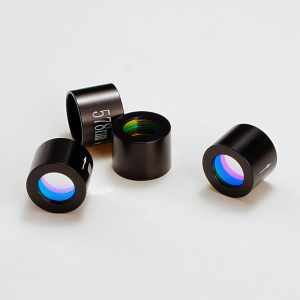
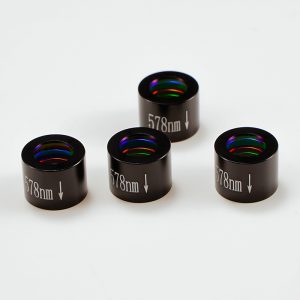
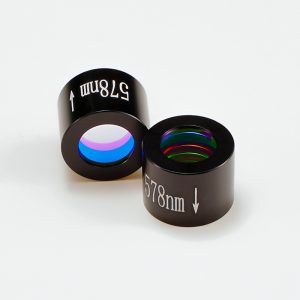
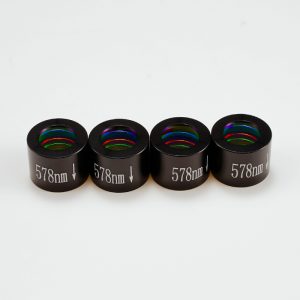
Model: BP578
Specifications: Customized
Material: Optical glass
POCT (Point-of-Care Testing) is a type of small portable diagnostic instrument designed to quickly obtain test results at the sampling site or at the patient’s bedside. The main features of this device include miniaturization, portability, simple operation, no need for a special operating environment, and most products use dry film fixed reagents, which have relatively simple storage conditions and are easy to use.
Advantages of POCT instant testing
Rapid diagnosis: POCT testing can produce results within a few minutes to tens of minutes, greatly shortening the waiting time of traditional laboratory testing, which is particularly critical in time-sensitive medical scenarios such as emergency and intensive care.
Improving medical efficiency: Since the test can be performed next to the patient, doctors can obtain test results in a shorter time, so as to quickly formulate and adjust treatment plans, improve medical efficiency and patient satisfaction.
Wide range of application: POCT equipment is suitable for various departments such as inpatient departments, emergency rooms, ICUs, and outpatient clinics, and can be applied to various testing needs, such as blood sugar monitoring, electrolytes, myocardial markers, etc., covering a variety of medical scenarios from emergency to chronic disease management.
Easy to operate: Since the design is oriented to on-site operation, POCT equipment usually does not require complex sample processing or professional technicians to operate, which enables medical staff to complete the test more efficiently, especially suitable for medical environments with limited resources.
Application scenarios
Emergency: In the emergency environment, POCT devices can quickly provide key indicators such as myocardial enzymes, blood sugar, electrolytes, etc., to assist doctors in quickly assessing the condition and formulating emergency plans.
Intensive Care Unit (ICU): In the ICU, POCT devices can help monitor the patient’s physiological indicators in real time to ensure that critically ill patients receive timely treatment adjustments.
Inpatient and outpatient departments: Daily examinations and preoperative examinations of inpatients and outpatients can also be completed through POCT devices, which improves the efficiency of bedside care and disease management.
Product Parameters
| Indicator parameters | NBP535 | NBP610 | NBP578 |
| Central wavelength | 535+/-2nm | 610+/-2nm | 578+/-2nm |
| Transmittance | 535nm@T>50% | 610nm@T>50% | 578nm@T>50% |
| FWHM | 10+/-2nm | 10+/-2nm | 10+/-2nm |
| Cut-off depth | 350-1100nm@T<0.01%(OD4) | 350-1100nm@T<0.01%(OD4) | 350-1100nm@T<0.01%(OD4) |
| Indicator parameters | R5.262 Plano-convex lens K9 | Indicator parameters | NBP610 |
| Outer diameter | 6.55mm(tolerance:+0.02/-0.1mm) | diameter | 12mm(-0.015/-0.035mm) |
| Center thickness | 4.8士0.1mm | Center thickness | |
| Edge thickness | 2.27mm | Edge thickness | 1.83mm |
| Focal length | 10.192mm | R-Value | R8.78士0.05 |
| Radius of curvature | R5.262 | aperture | N=3 |
| Aperture | N=2 | Local aperture | 0.3 |
| Irregular aperture | △N=0.5 | eccentric | B=3(level) |
| Sample grade accuracy | AR=B级 | focal length | f=16.99士0.05 |
Transmittance wavelength characteristics (reference data)