
Optical Components
ND64 Neutral Density Filter
ND64 Neutral Density Filter
The ND64 neutral density filter is a fixed optical attenuation element designed to reduce the amount of transmitted light in imaging, optical sensing, and measurement applications.
Under the conventional ND factor designation, ND64 corresponds to a nominal 64-fold reduction in transmitted light intensity. This is equivalent to 6 exposure stops and approximately 1.56% theoretical transmission.
For engineering applications, the actual transmission spectrum, operating wavelength range, substrate, and mechanical specifications must be verified against the application requirements.
Values shown above are derived from the ND64 designation and are not batch-specific measured results.
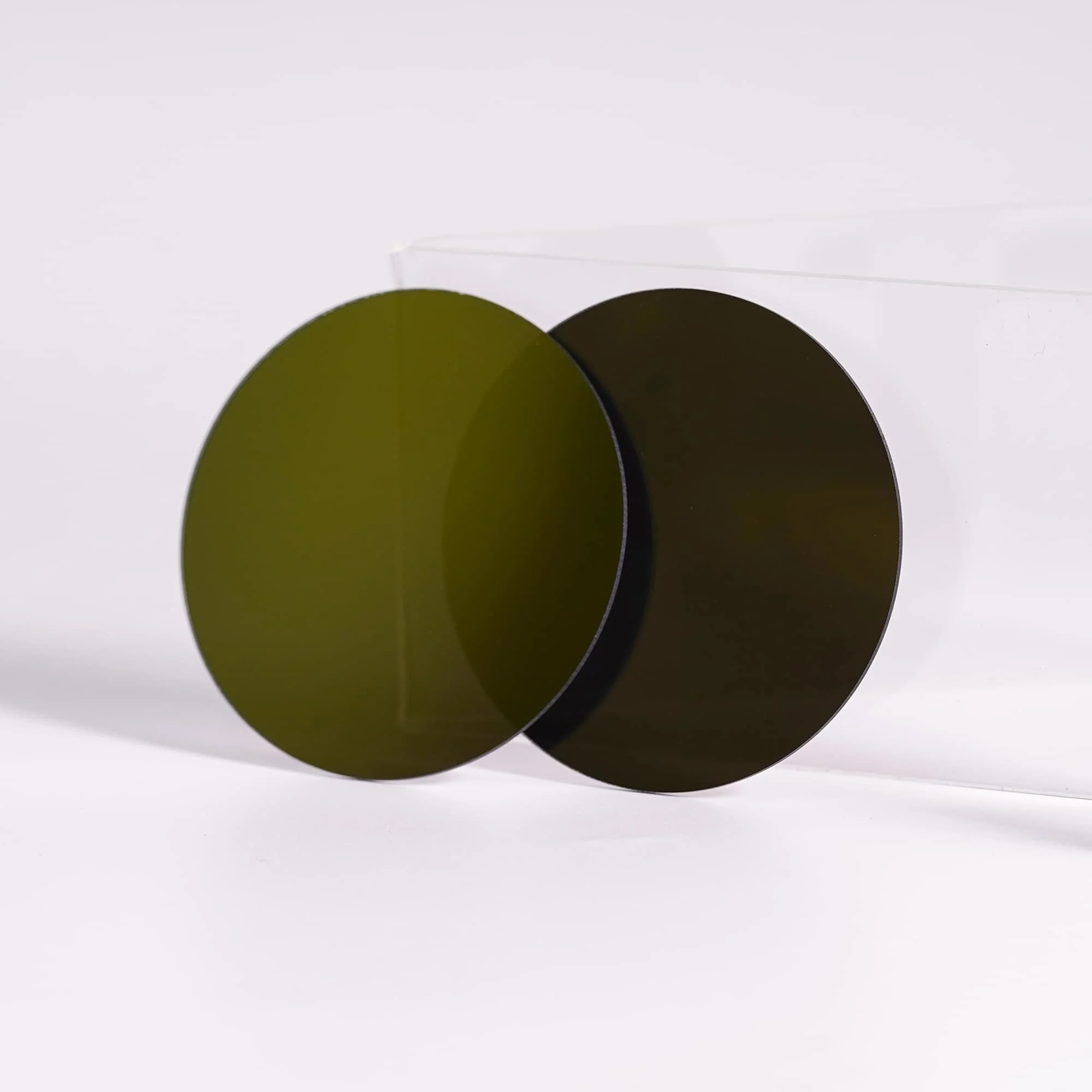
ND64 Filter Product Images
The following photographs show the ND64 optical filter supplied for this product listing. Photographic appearance alone does not establish optical density, spectral neutrality, or transmission tolerance.
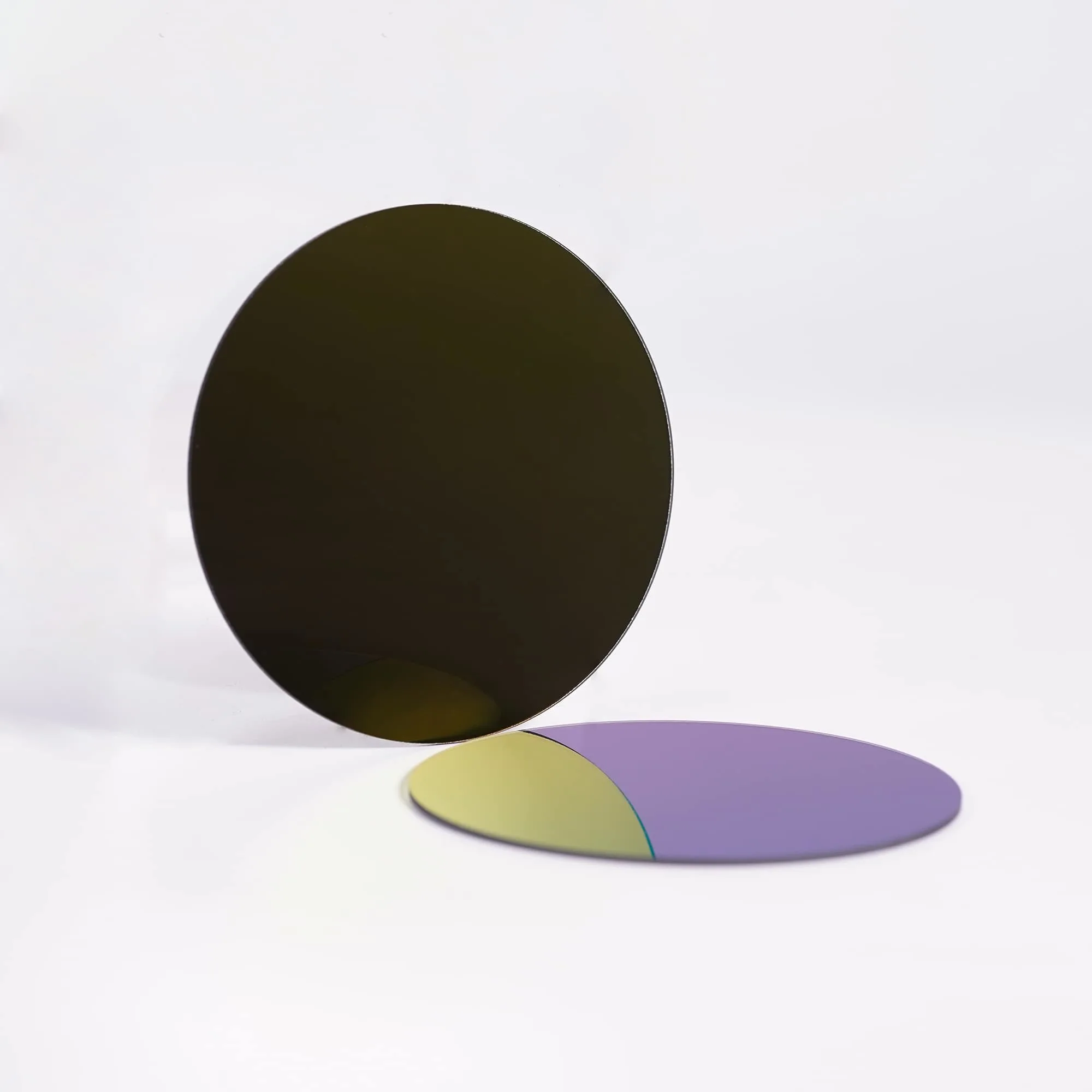

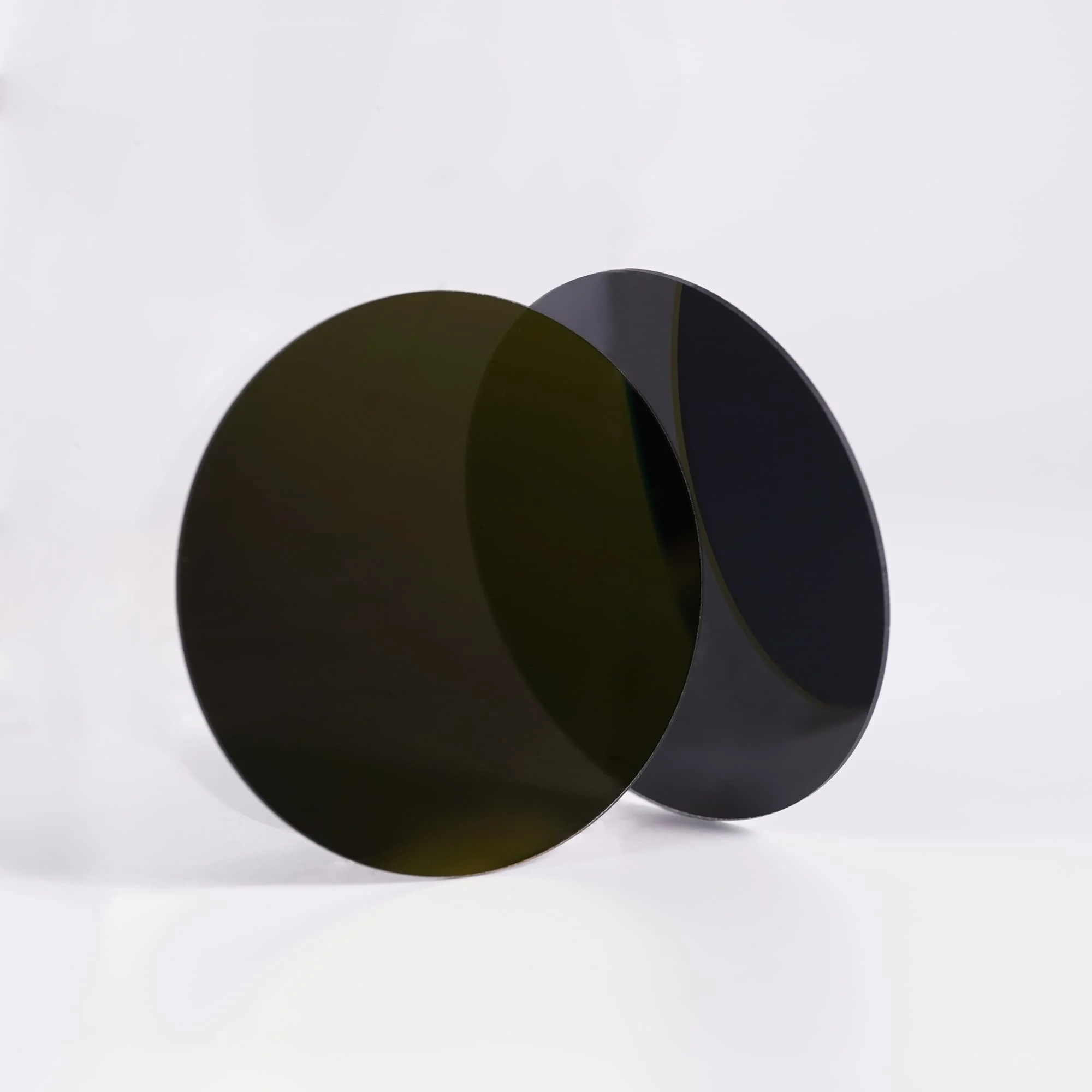
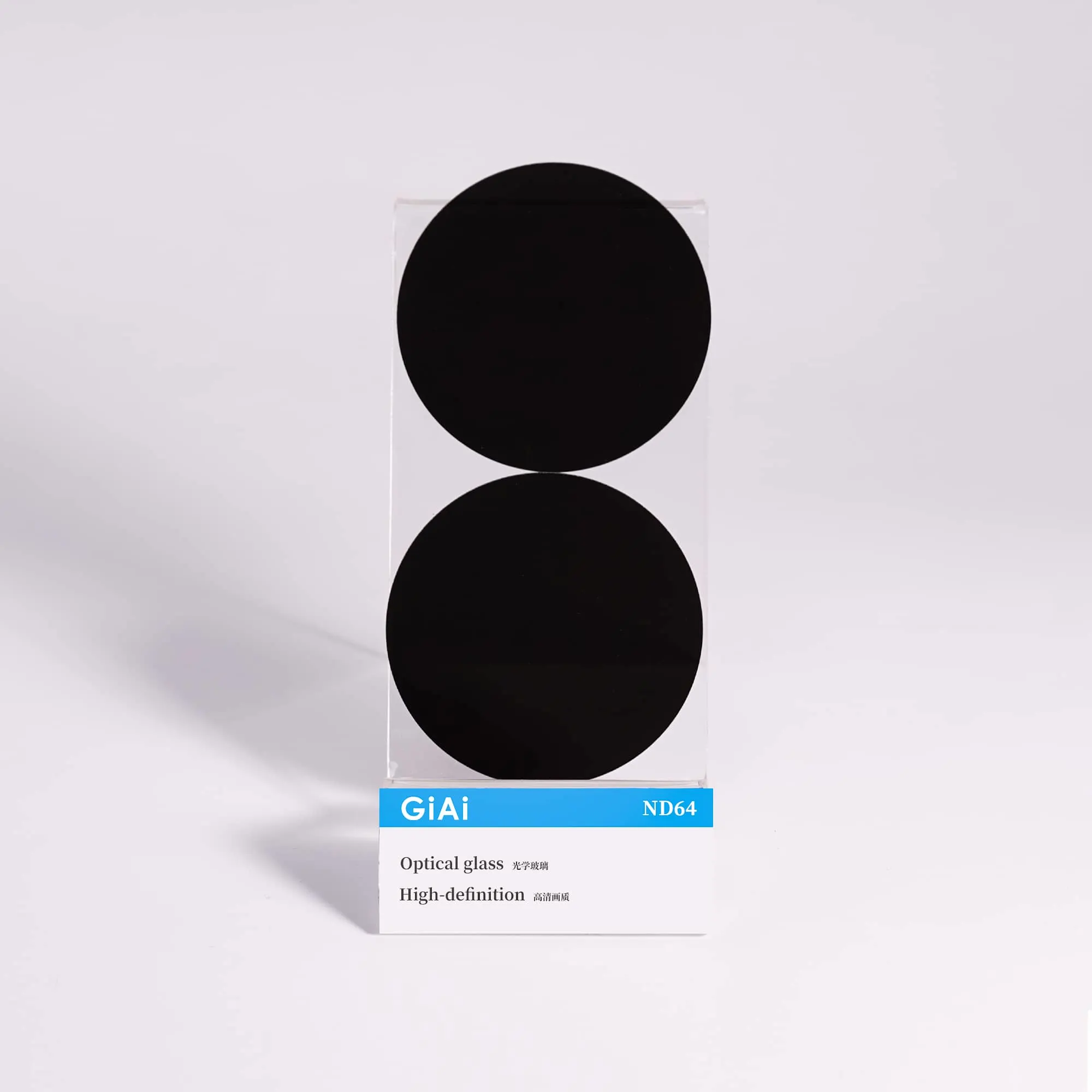
ND64 Neutral Density Filter Specifications
The table distinguishes the nominal optical attenuation associated with the ND64 designation from product-specific characteristics that require confirmation.
| Product | ND64 Neutral Density Filter |
|---|---|
| Filter Type | Fixed neutral density filter |
| ND Factor | 64 (nominal) |
| Theoretical Transmission | 1.5625% |
| Nominal Optical Density | Approximately OD 1.806 |
| Exposure Reduction | 6 stops |
| Geometry | Circular optical element |
| Substrate Material | To be confirmed |
| Operating Wavelength Range | To be specified and verified |
| Diameter and Thickness | Subject to drawing verification |
| Transmission Tolerance | Subject to agreed specifications |
| Coating Configuration | To be confirmed |
| Inspection Requirements | Defined by application and project |
The nominal transmission and optical density values are theoretical equivalents. They should not be interpreted as a guaranteed transmission curve or production tolerance for this filter.
How Does an ND64 Filter Attenuate Light?
A neutral density (ND) filter reduces optical intensity over a specified wavelength range. Unlike bandpass or longpass filters, its primary purpose is to control the amount of light rather than isolate one spectral region.
Optical density (OD) provides a logarithmic measure of attenuation. When transmission is expressed as a fraction between zero and one, the relationship is:
ND64: T = 1/64 = 0.015625
Nominal OD ≈ 1.806
For example, an ideal ND64 attenuator would transmit approximately 1.56% of incident optical power within its specified operating range. However, the actual transmission depends on wavelength, material, coating design, and measurement conditions.
Neutral density does not necessarily mean perfectly wavelength-independent attenuation. Where color balance or radiometric accuracy is important, engineers should evaluate the transmission spectrum across the complete operating wavelength range.
Applications of ND64 Neutral Density Filters
Imaging and Exposure Control
An ND64 filter can be considered when an imaging system receives excessive illumination and additional optical attenuation is required. Filter selection should account for the sensor response, lens configuration, and intended exposure settings.
Machine Vision Systems
In machine vision applications, excessive light may drive the image sensor toward saturation. A suitable neutral density filter can help reduce received intensity without changing the illumination source settings.
Optical Measurement
Optical testing and photodetection setups may require controlled attenuation to keep received signals within a useful detector range. Calibration work requires measured spectral transmission under defined conditions.
Light Source and Instrument Testing
A fixed ND filter can provide an attenuation element for evaluating optical instruments and illumination systems. Power handling, thermal effects, and unwanted reflections must be assessed for the actual source.
Key Engineering Considerations
Selecting an ND64 filter requires more than matching the attenuation factor. The following parameters determine whether the filter is suitable for a particular optical system.
- Operating Wavelength: Define the wavelength or spectral band over which attenuation is required.
- Transmission and OD: Specify the permitted transmission range and the wavelength at which optical density is evaluated.
- Spectral Neutrality: Determine how much wavelength-dependent transmission variation the application can tolerate.
- Angle of Incidence: Consider the operating AOI and angular distribution of the beam, particularly for coated filters.
- Dimensions and Clear Aperture: Define the required diameter, thickness, usable optical area, and mounting constraints.
- Substrate and Coating: Review material transmission, absorption, reflection, and environmental requirements.
- Optical Power and Temperature: Evaluate possible thermal loading, source power density, and coating limitations where relevant.
- Inspection and Documentation: Agree on the measurement conditions, acceptance criteria, and any required test reports.
For broadband imaging systems, a single transmission value at one wavelength may not adequately describe the filter’s spectral behavior. Verification across the intended operating band is recommended.
Important Application Limitations
A neutral density filter generally attenuates both useful optical signals and background light within its attenuation range. It should not be assumed to improve signal-to-noise ratio unless the resulting detector operating conditions justify that effect.
ND64 attenuation is also not sufficient information for assessing laser compatibility. Laser applications require separate consideration of operating wavelength, irradiance, beam diameter, exposure duration, thermal effects, and laser-induced damage threshold where applicable.
This product must not be treated as certified laser safety eyewear, a laser protection window, or a solar observation filter without appropriate product-specific qualification.
Frequently Asked Questions
What does ND64 mean?
ND64 denotes a nominal attenuation factor of 64. In the conventional ND-factor system, the transmitted light intensity is reduced to approximately 1/64 of the incident intensity under ideal conditions.
What is the optical density of ND64?
The theoretical optical density is approximately 1.806, often rounded to OD 1.8. An OD 1.8 filter has a theoretical transmission of approximately 1.58%, so the two designations are very close but not mathematically identical.
Is an ND64 filter always color-neutral?
Not necessarily. Spectral neutrality depends on the actual material, coating, and operating band. A measured spectral transmission curve is needed when color consistency or radiometric accuracy is critical.
Can an ND64 filter be used with lasers?
Laser use must be assessed against the wavelength, optical power, beam size, and relevant damage limitations. The ND64 rating alone does not establish laser compatibility or safety.
Can GIAI review custom ND64 requirements?
GIAI Photonics can review drawing-based, specification-based, or sample-based optical filter projects. Feasibility and acceptance criteria depend on the requested substrate, geometry, spectral performance, coating, and inspection requirements.
ND64 Filter Specification Review
GIAI Photonics supports custom optical filter projects based on drawings, samples, and technical specifications.
For an ND64 application, please provide the operating wavelength range, required transmission or optical density, dimensions, quantity, angle of incidence, and relevant inspection requirements.
These details help determine the appropriate material, manufacturing, coating, and verification approach for the project.
Request an Engineering Review