This is the GIAI past corporate news section, which brings together various activities and exhibitions that GIAI has participated in, the latest industry communication trends, corporate notifications, holiday details, etc. You are welcome to read!optical filters, optical coatings, interference filters, bandpass filters, longpass filters, shortpass filters, AR coatings
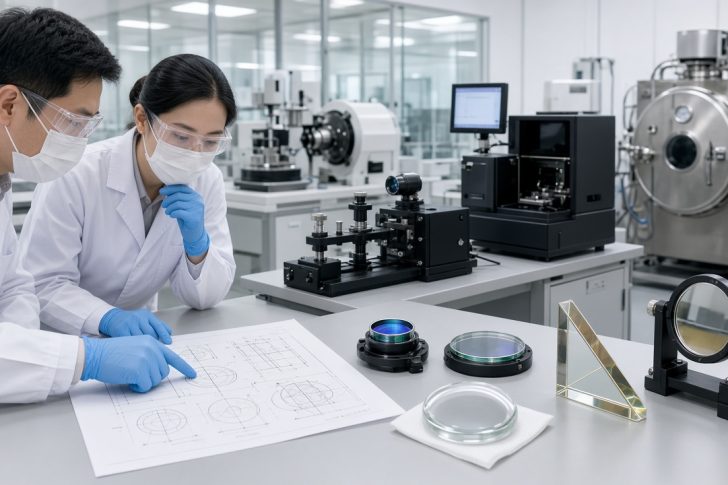
Searching for a custom optics manufacturer in China usually means the optical function is already known, a drawing exists, or a prototype needs to be converted into a repeatable production component. The difficult part is not finding a company that can make a lens, filter,…
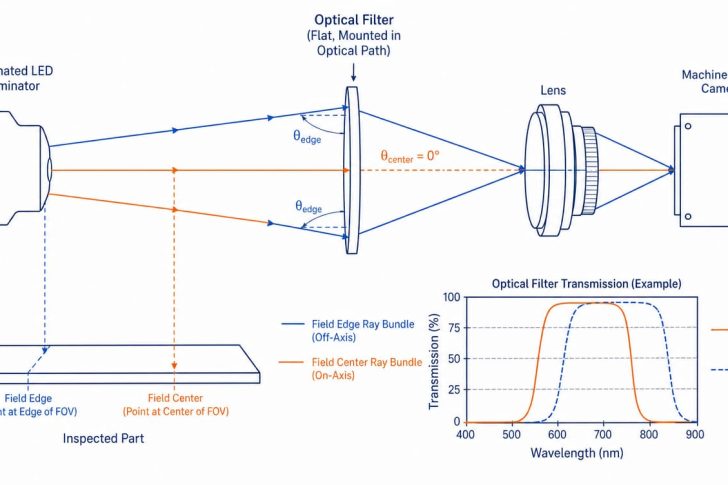
To choose an optical filter for machine vision, start from the illumination spectrum rather than the filter catalog. Match the filter passband to the light your system actually uses, then verify that the passband still lines up once you account for the range of angles…
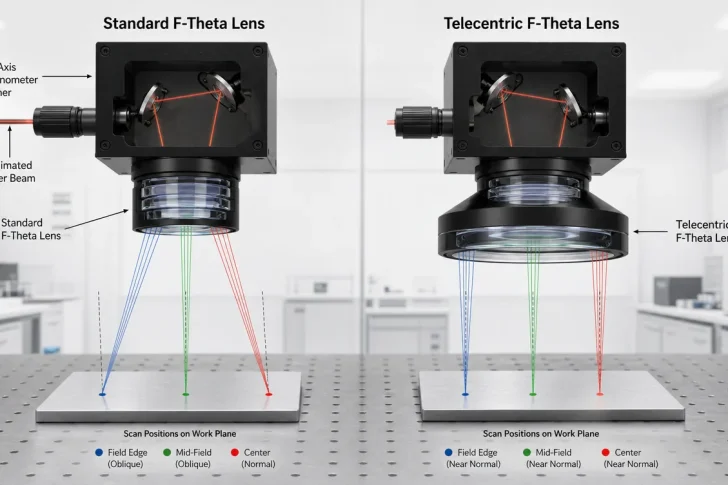
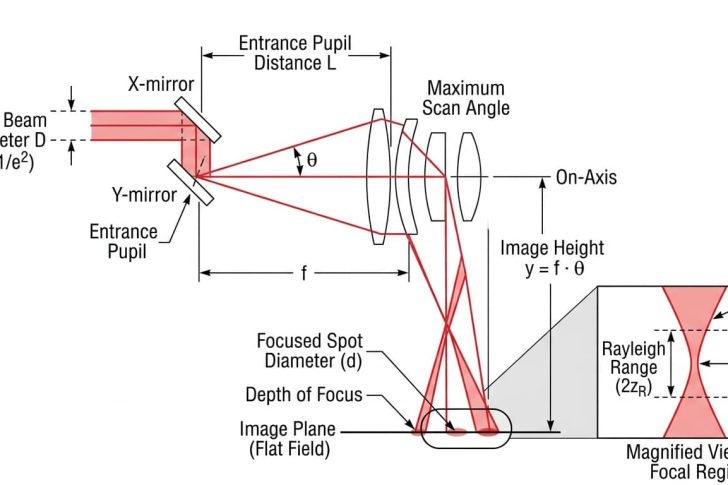
Telecentric F-Theta Lens vs Standard F-Theta Lens: Engineering Differences and Selection A telecentric F-theta lens vs standard F-theta lens comparison is mainly a question of beam geometry at the workpiece. Both lens types can be designed for a substantially flat scanning field and approximately linear…
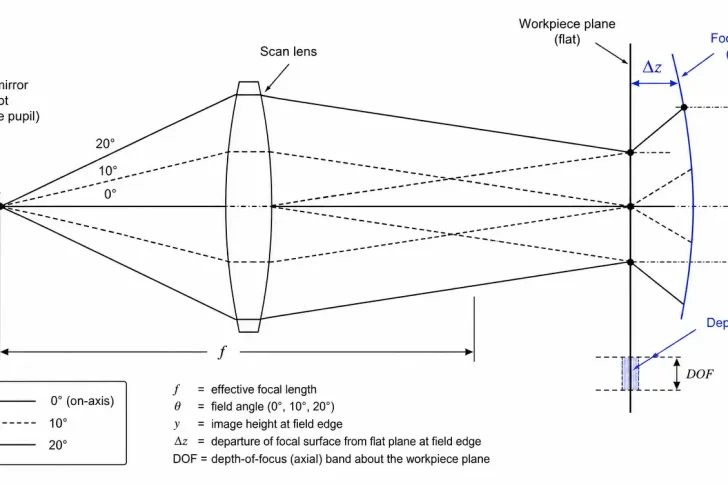
F-theta distortion and field curvature are both field-dependent errors in a laser scan lens, but they fail in completely different ways. F-theta distortion is a position error: the focused spot lands somewhere other than where the scan angle says it should, while staying sharp. Field…
In an f-theta scanning system, spot size and input beam diameter are inversely related: double the collimated beam diameter at the lens, and the focused spot diameter halves. That single relationship is the reason a beam expander sits between almost every laser and every galvanometer…
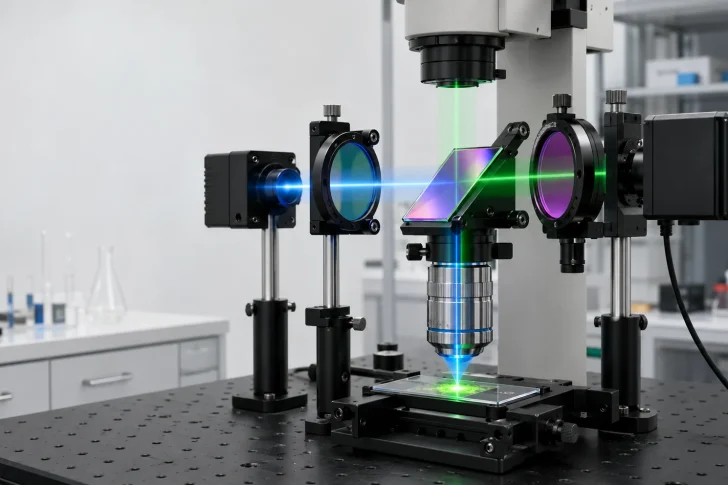
A fluorescence filter set is three components engineered as one spectral system: an excitation filter (exciter) that cleans up the illumination, a dichroic beamsplitter that separates excitation from emission, and an emission filter (emitter) that passes fluorescence and rejects everything else. Fluorescence filter set design…
The central difference in an aspheric lens vs spherical lens comparison is surface geometry. A spherical surface has a constant radius of curvature, while an aspheric surface deliberately changes curvature from its optical axis toward its edge. That extra design freedom can reduce spherical aberration…
The practical difference in an achromatic lens vs singlet lens comparison is wavelength control. A singlet uses one optical element and is usually adequate for monochromatic light, modest numerical aperture, or applications with relaxed imaging requirements. An achromatic lens normally combines two elements with different…
The practical difference in an F-theta lens vs standard focusing lens comparison is the job each optic is designed to perform. A standard focusing lens is normally chosen to form a good focus at one on-axis location, or within a limited field defined by its…
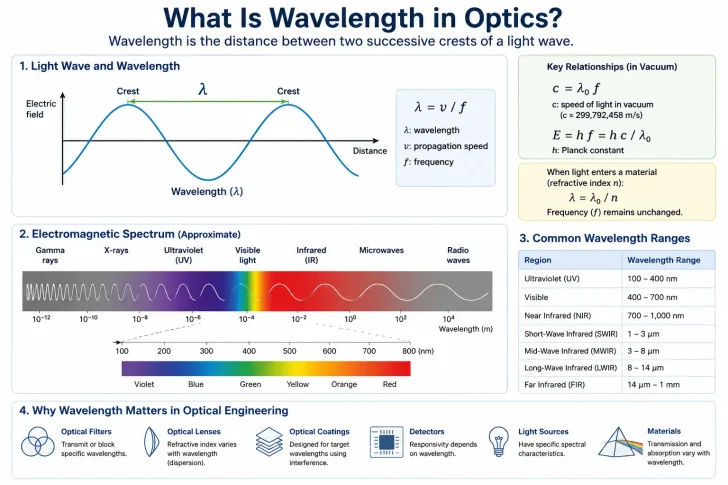
Wavelength in optics is the spatial distance over which a light wave repeats, commonly measured from one wave crest to the next. It is represented by the Greek letter λ (lambda) and is normally expressed in nanometers (nm) for visible and near-infrared optics or micrometers…
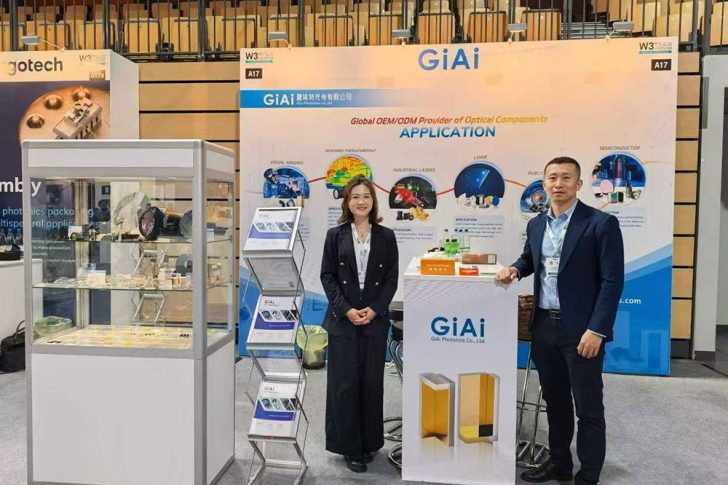
Wetzlar, Germany – March 19, 2026 – GIAI Photonics, a professional processor specializing in custom optical lenses and components, proudly wrapped up a highly productive two-day exhibition at the prestigious W3+ Wetzlar 2026 today. Held from March 18th to 19th in the historic heart of Germany’s…
Dear Valued Client, We are thrilled to announce that Giai Photonics Co., Ltd. will be exhibiting at SPIE Photonics West 2026, the premier global event for lasers, biomedical optics, optoelectronics, and cutting-edge technologies in biophotonics, quantum, and vision applications. We cordially invite you to visit us at Booth 1831 from 20…