What Is Extinction Ratio in a Polarizer?
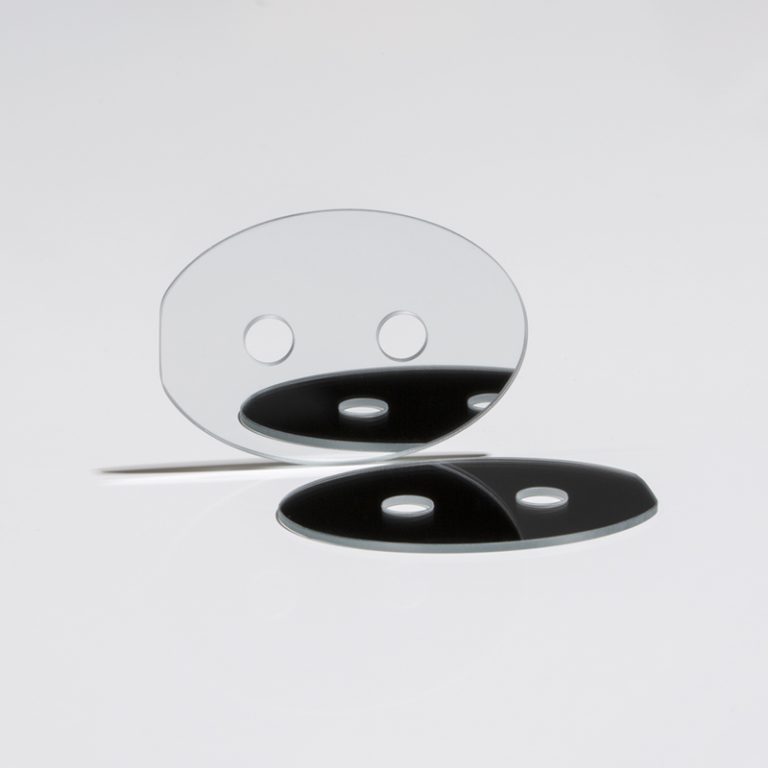
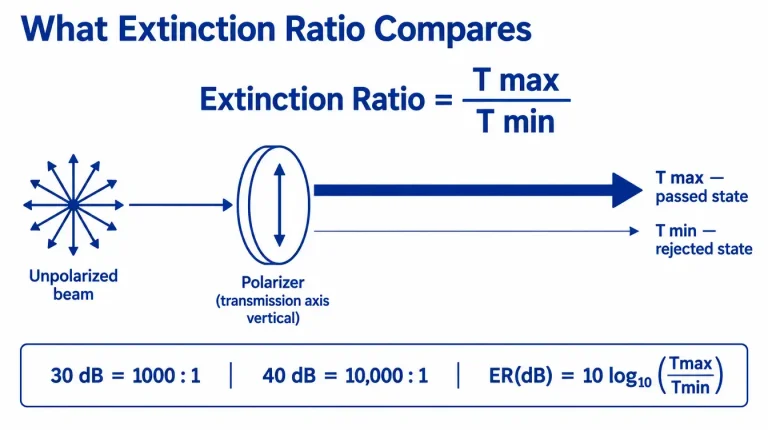
Extinction ratio is the ratio between the transmittance a polarizer gives to the polarization state it passes and the transmittance it gives to the orthogonal…
Read article
GIAI Photonics
GIAI’s latest optical information display area contains a variety of news and information on popular science explanations, working principles, usage tips, etc. of various optical filters, prisms, lenses and components. There is always one that interests you.
Extinction ratio is the ratio between the transmittance a polarizer gives to the polarization state it passes and the transmittance it gives to the orthogonal…
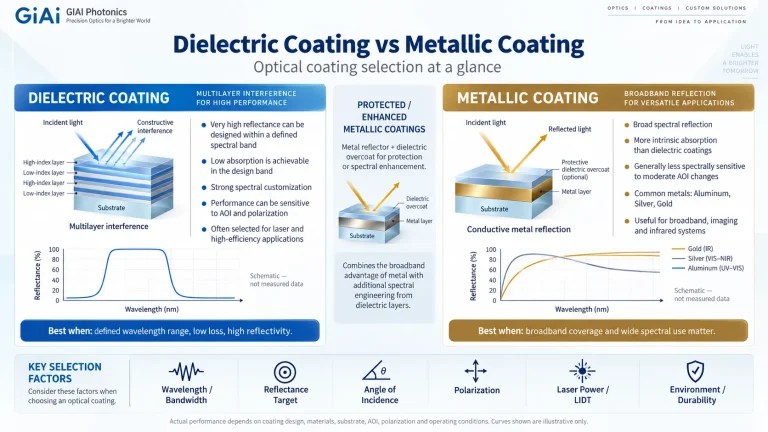
Read articleWhen specifying a mirror, beamsplitter, filter, or other coated optical component, choosing between a dielectric coating and a metallic coating is not simply a question…
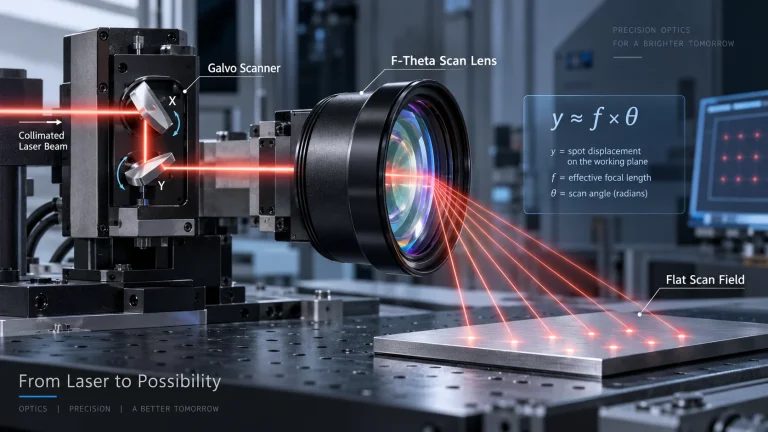
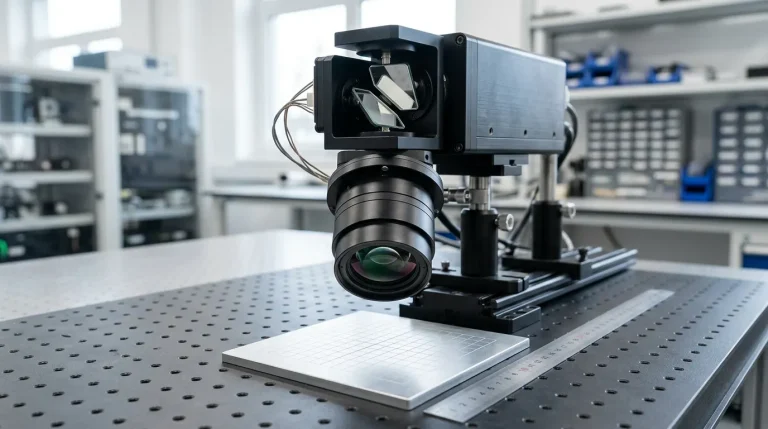
Read articleChoosing an F-theta scan lens manufacturer is not simply a matter of matching a lens to a laser wavelength. An F-theta lens works as part…
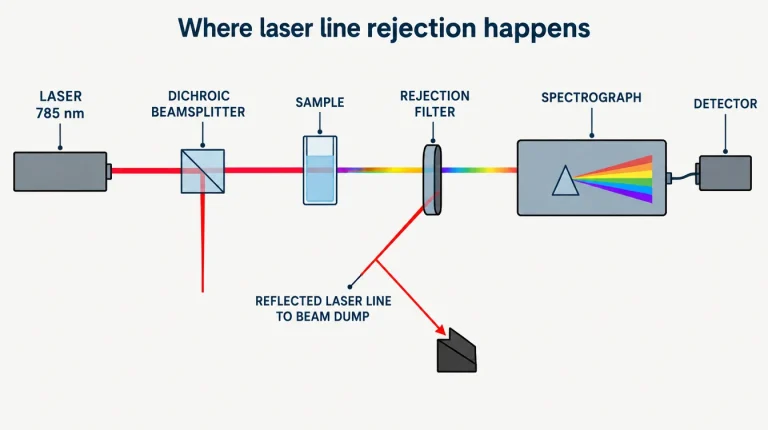
Read articleVerifying laser line rejection for Raman spectroscopy means proving three separate things, not one: the optical density at the laser wavelength under the angle and…
Read articleA ghost image in a beamsplitter is a second, weaker image formed by light that reached the detector along an unintended optical path inside the…
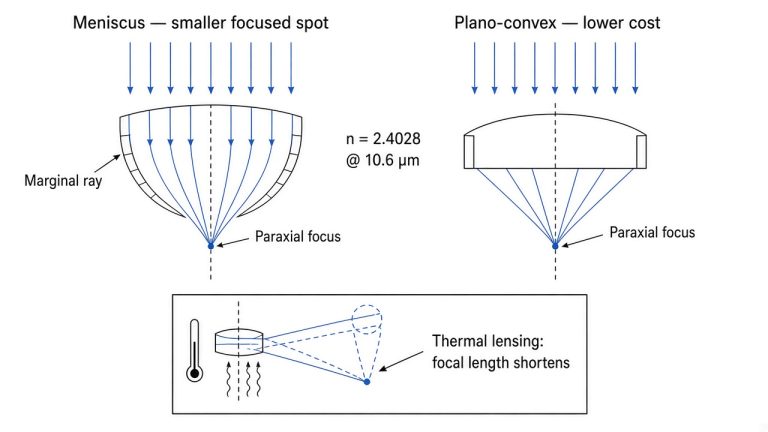
Read articleChoosing a ZnSe lens manufacturer comes down to three things you can actually verify: the grade and traceability of the chemical vapor deposition (CVD) zinc…
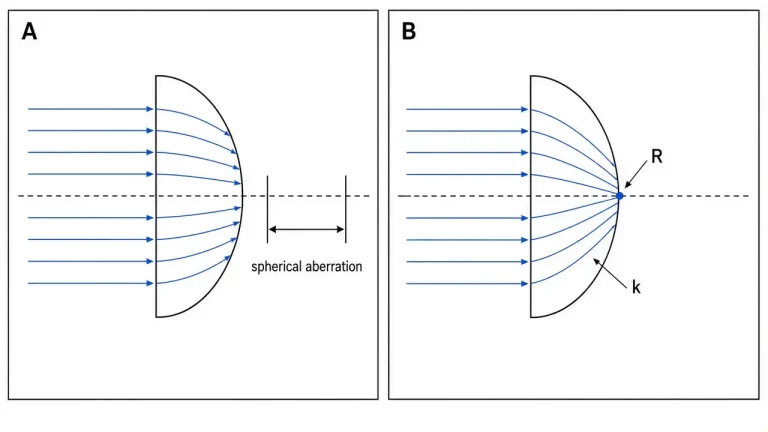
Read articleAn aspheric lens corrects spherical aberration in a single element. An achromatic lens corrects chromatic aberration by combining two glasses with opposing dispersion. The aspheric…
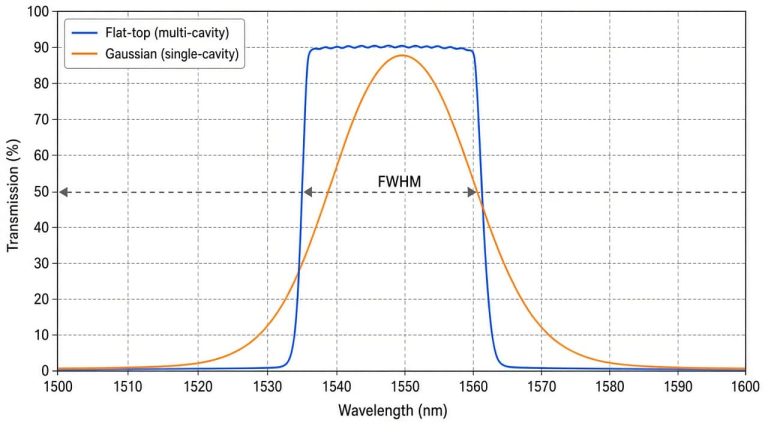
Read articleA flat-top bandpass filter holds near-peak transmission across the whole passband and then drops steeply at both edges. A Gaussian bandpass filter reaches maximum transmission…
Read articleChoosing between 905 nm vs 1550 nm LiDAR optical filters is not simply a matter of moving the center wavelength of the same bandpass filter.…
Read articleEngineers usually reach the question of how to calculate F-theta scan field size at one of two moments: when a marking field has to cover…
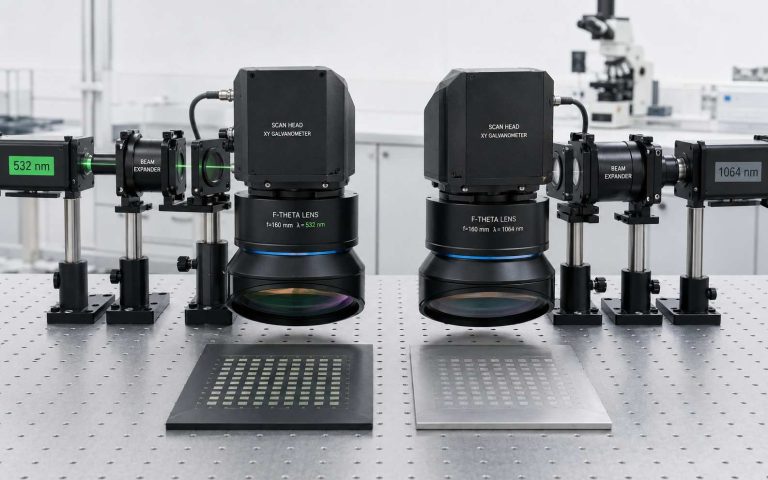
Read articleA 1064nm vs 532nm F-theta scan lens comparison starts with a simple rule: the scan lens must be designed for the laser wavelength used by…
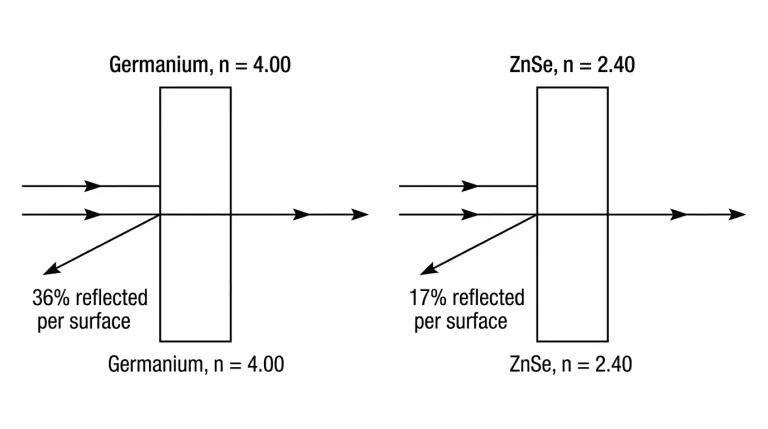
Read articleChoose a germanium infrared window when you need a rugged, visible-blocking aperture for an 8 to 14 µm thermal imager that stays below roughly 100…
Read article