Here we provide articles about popular science and applications of filters, lenses, prisms, reflectors, ND mirrors and other optical components. You are welcome to read! optical engineering articles, optical engineering guides, optical components, optical design, optics technology, photonics engineering
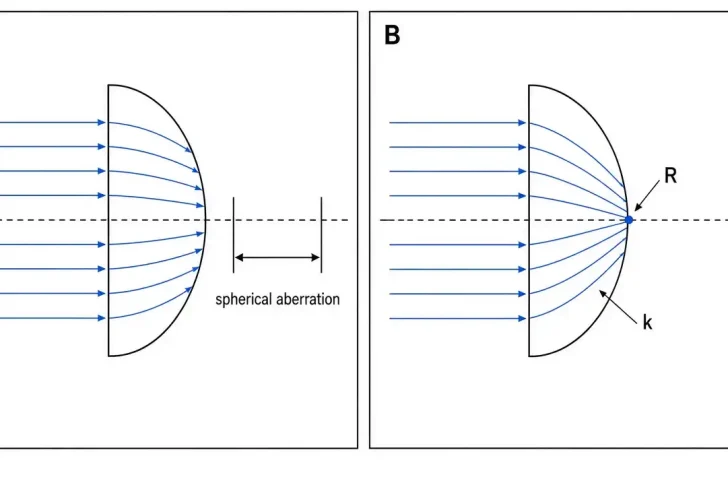
An aspheric lens corrects spherical aberration in a single element. An achromatic lens corrects chromatic aberration by combining two glasses with opposing dispersion. The aspheric lens vs achromatic lens decision therefore reduces to one question: is your dominant error source geometry or wavelength? A monochromatic…
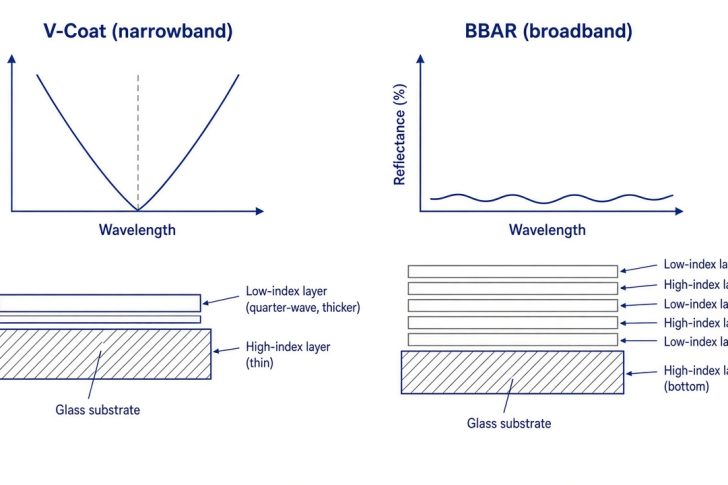
Use a V-coat when the optic sees one laser line and you need the last fraction of a percent of transmission. Use a broadband anti-reflection (BBAR) coating when the optic has to work across a spectral band, or when a second wavelength such as an…
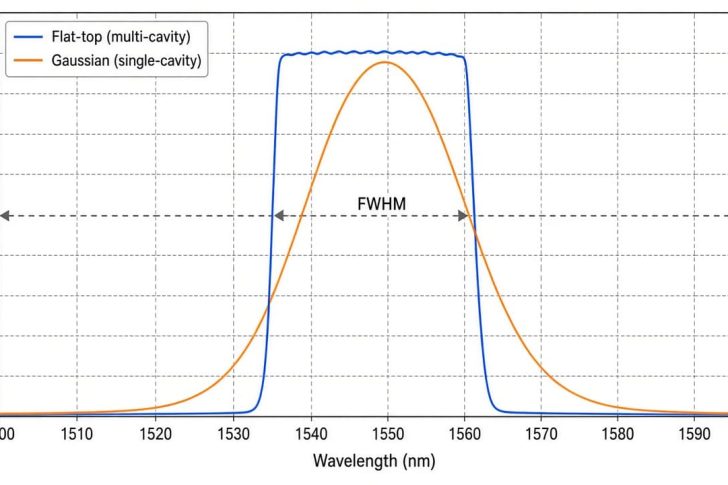
A flat-top bandpass filter holds near-peak transmission across the whole passband and then drops steeply at both edges. A Gaussian bandpass filter reaches maximum transmission only at the center wavelength and falls away gradually on either side. The choice between a flat-top vs Gaussian bandpass…
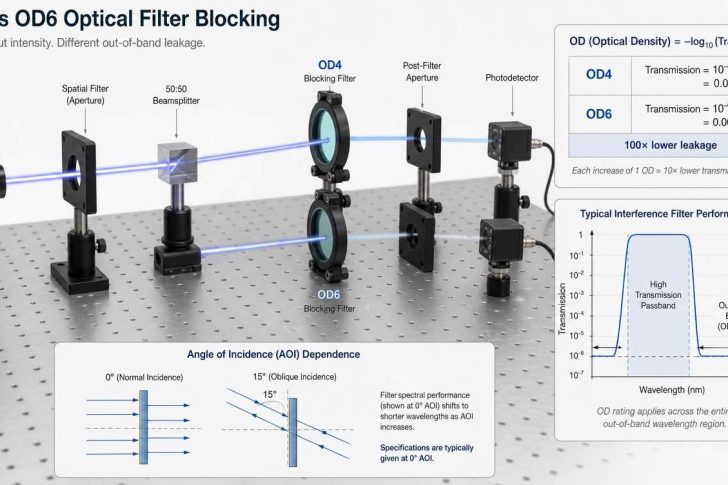
The practical difference between OD4 vs OD6 optical filter blocking is a factor of 100 in transmitted unwanted light. OD4 permits a maximum transmittance of 10-4, or 0.01%, while OD6 corresponds to 10-6, or 0.0001%. That difference can be important when a detector must separate…
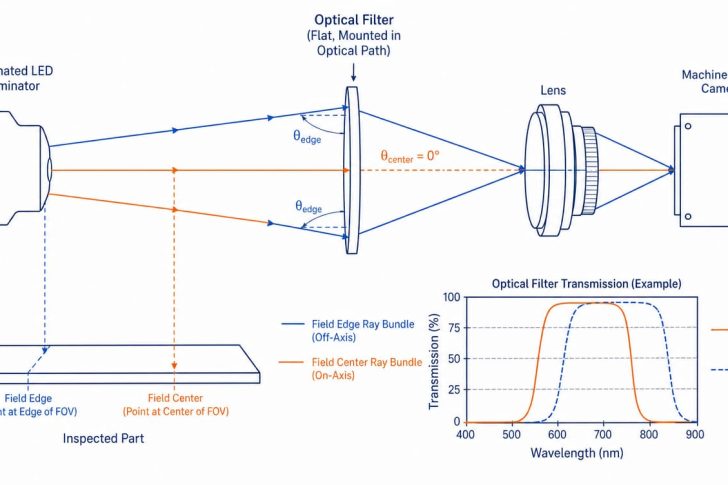
To choose an optical filter for machine vision, start from the illumination spectrum rather than the filter catalog. Match the filter passband to the light your system actually uses, then verify that the passband still lines up once you account for the range of angles…
Choosing between 905 nm vs 1550 nm LiDAR optical filters is not simply a matter of moving the center wavelength of the same bandpass filter. The two wavelengths are associated with different laser sources, detector materials, eye-safety constraints, ambient-light conditions and receiver architectures. Those differences…
1550 nm Narrow Bandpass Filter for LiDAR: How to Specify the Receiver Filter A 1550 nm narrow bandpass filter for LiDAR (Light Detection and Ranging) sits directly in front of the InGaAs (indium gallium arsenide) detector, and it has exactly one job: discard solar photons…
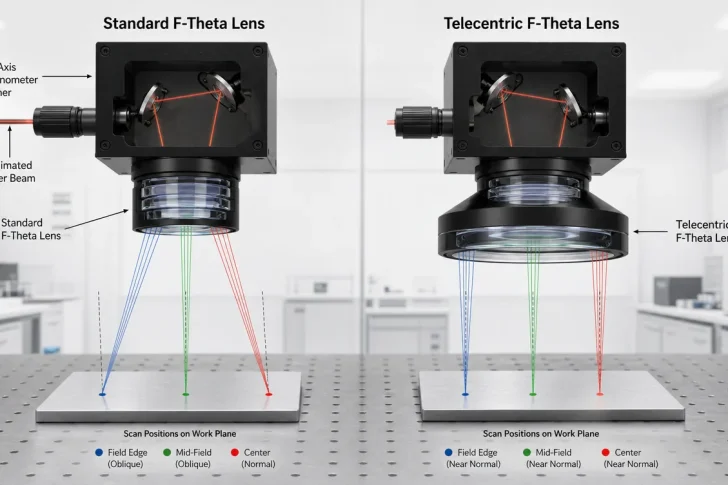
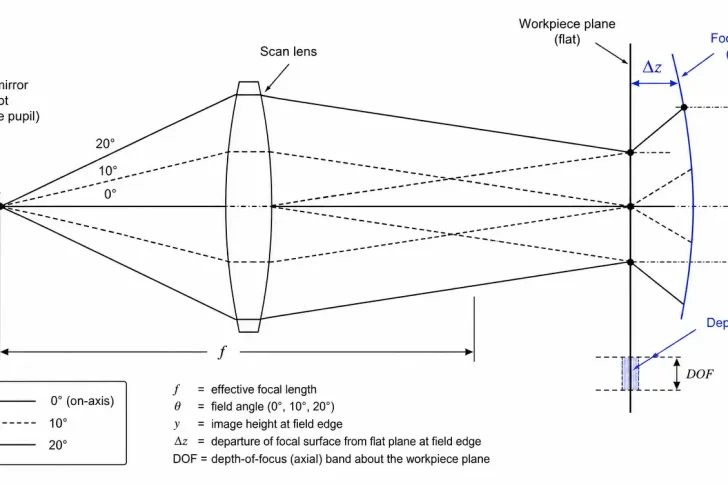
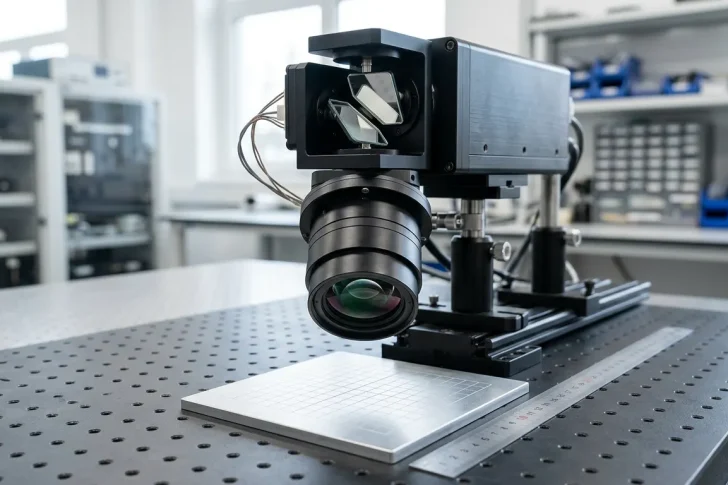
Telecentric F-Theta Lens vs Standard F-Theta Lens: Engineering Differences and Selection A telecentric F-theta lens vs standard F-theta lens comparison is mainly a question of beam geometry at the workpiece. Both lens types can be designed for a substantially flat scanning field and approximately linear…
F-theta distortion and field curvature are both field-dependent errors in a laser scan lens, but they fail in completely different ways. F-theta distortion is a position error: the focused spot lands somewhere other than where the scan angle says it should, while staying sharp. Field…
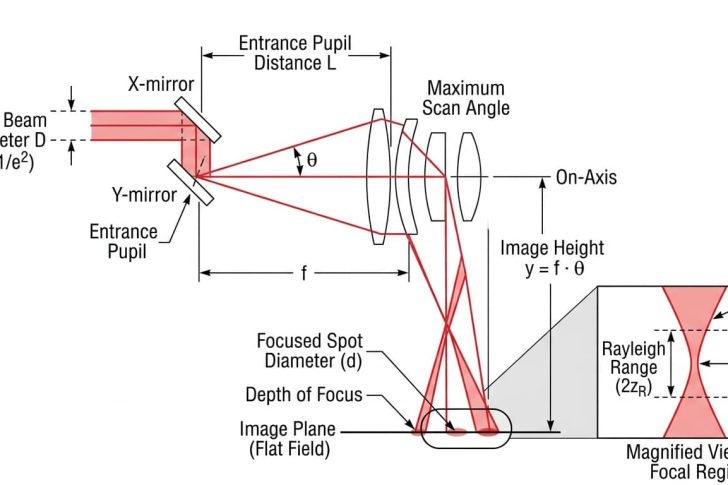
Engineers usually reach the question of how to calculate F-theta scan field size at one of two moments: when a marking field has to cover a part of known dimensions, or when a calculated field does not agree with the number printed on a lens…
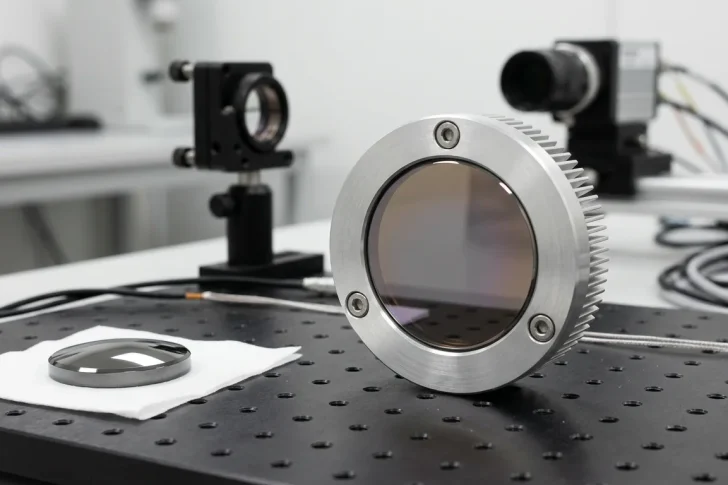
Thermal lensing in germanium optics is the change in optical power that occurs when absorbed radiation heats a germanium element non-uniformly, creating a radial temperature gradient that is converted into a refractive index gradient through the material’s thermo-optic coefficient. The heated element behaves as if…
In an f-theta scanning system, spot size and input beam diameter are inversely related: double the collimated beam diameter at the lens, and the focused spot diameter halves. That single relationship is the reason a beam expander sits between almost every laser and every galvanometer…