Here we provide articles about popular science and applications of filters, lenses, prisms, reflectors, ND mirrors and other optical components. You are welcome to read! optical engineering articles, optical engineering guides, optical components, optical design, optics technology, photonics engineering
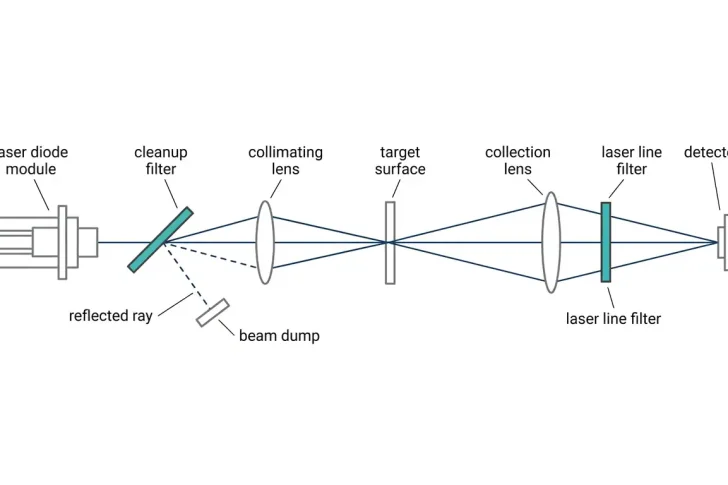
In most catalogs, “laser line filter” and “laser cleanup filter” describe the same physical object: a narrow dielectric bandpass filter centered on a laser wavelength. The real distinction in a laser line filter vs laser cleanup filter comparison is not the coating, it is where…
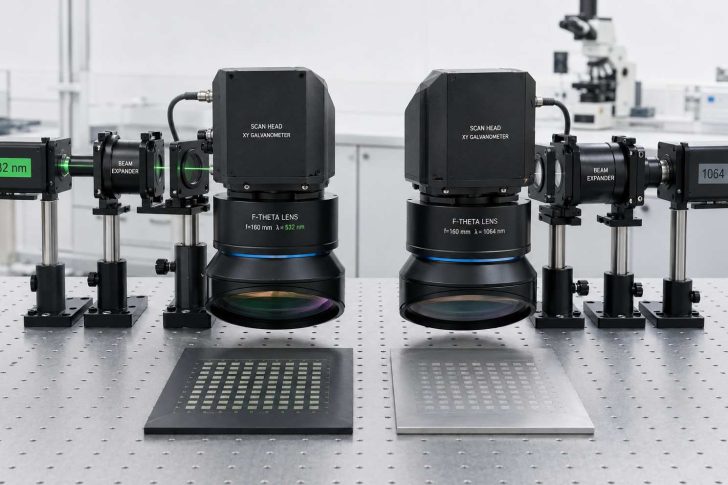
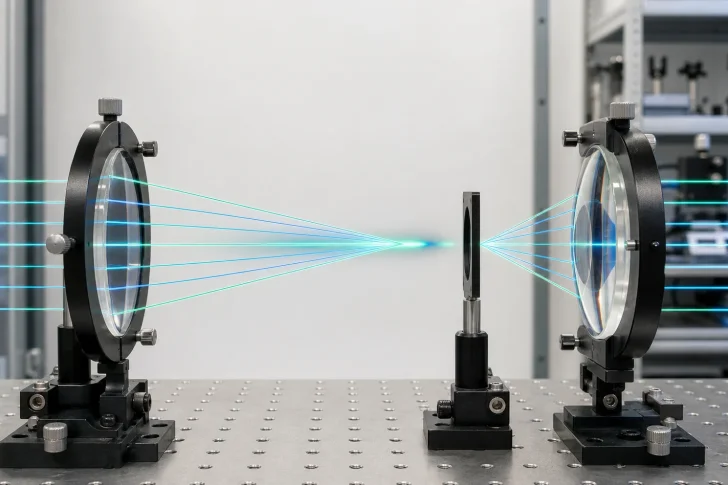
A 1064nm vs 532nm F-theta scan lens comparison starts with a simple rule: the scan lens must be designed for the laser wavelength used by the system. A 532 nm lens is not simply a higher-resolution version of a 1064 nm lens, and a 1064…
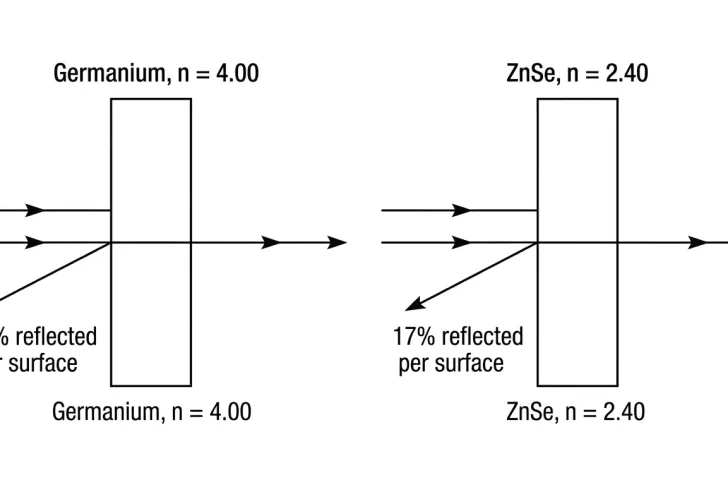
Choose a germanium infrared window when you need a rugged, visible-blocking aperture for an 8 to 14 µm thermal imager that stays below roughly 100 °C. Choose a zinc selenide (ZnSe) window when the aperture has to pass a high-power CO2 laser beam at 10.6…
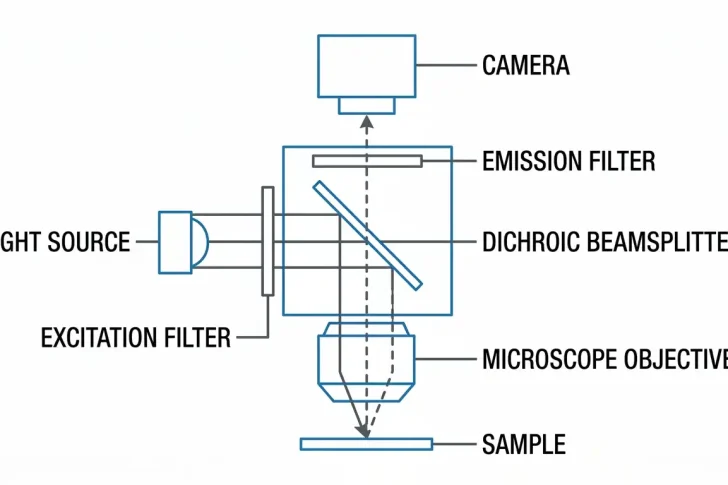
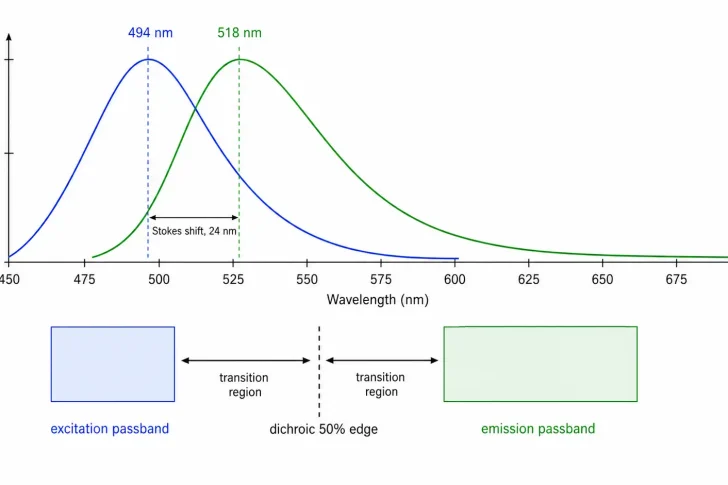
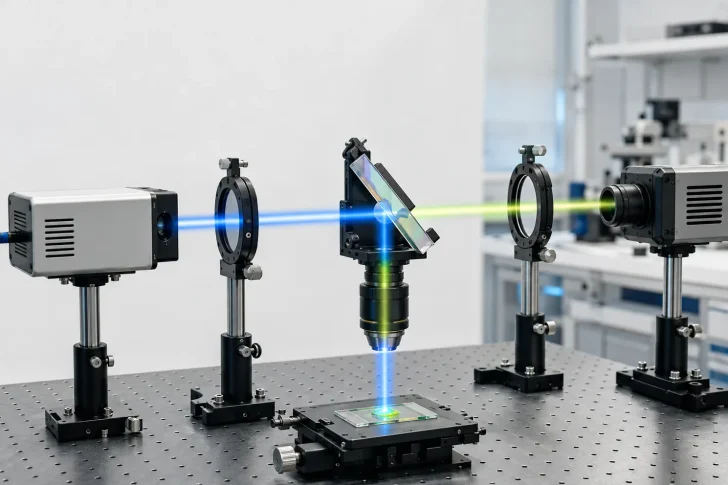
Treat the three components as one optical system. To choose excitation, emission, and dichroic filters for fluorescence, start from the fluorophore’s absorption and emission spectra, place the dichroic edge in the crossover region between them, then set the exciter and emitter passbands so their combined…
The Stokes shift of a fluorophore is the spectral gap you have to work with, and that gap sets every meaningful parameter in the filter set. How Stokes shift affects fluorescence filter selection comes down to a single budget: the wavelength distance between the excitation…
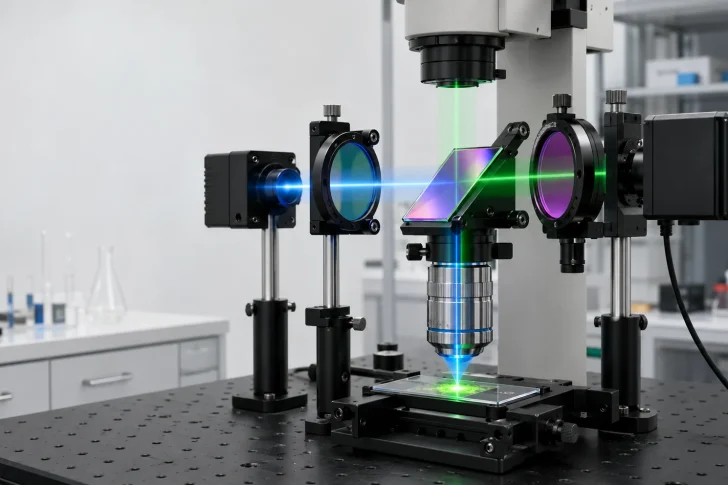
A fluorescence filter set is three components engineered as one spectral system: an excitation filter (exciter) that cleans up the illumination, a dichroic beamsplitter that separates excitation from emission, and an emission filter (emitter) that passes fluorescence and rejects everything else. Fluorescence filter set design…
The central difference in an aspheric lens vs spherical lens comparison is surface geometry. A spherical surface has a constant radius of curvature, while an aspheric surface deliberately changes curvature from its optical axis toward its edge. That extra design freedom can reduce spherical aberration…
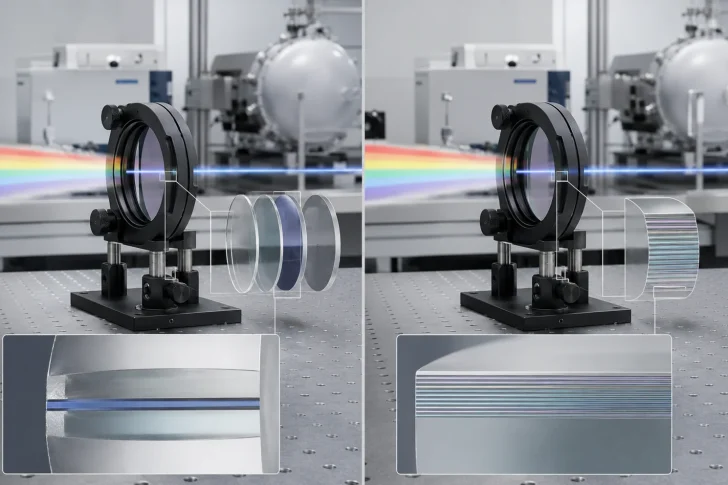
When engineers compare hard coated vs soft coated optical filters, the most important difference is not simply whether one coating feels physically harder than another. The terms describe two broad approaches to thin-film filter construction that differ in coating materials, deposition conditions, film density, environmental…
If your search starts with “dichroic mirror for fluorescence manufacturer,” the most important question is not simply who can supply the optic. The engineering task is to determine whether the dichroic mirror has the correct spectral transition, reflectance and transmission bands, angle-of-incidence behavior, polarization performance…
The practical difference in an achromatic lens vs singlet lens comparison is wavelength control. A singlet uses one optical element and is usually adequate for monochromatic light, modest numerical aperture, or applications with relaxed imaging requirements. An achromatic lens normally combines two elements with different…
The practical difference in an F-theta lens vs standard focusing lens comparison is the job each optic is designed to perform. A standard focusing lens is normally chosen to form a good focus at one on-axis location, or within a limited field defined by its…
A CO2 laser ZnSe lens is an infrared optical component designed for focusing and transmitting CO2 laser energy, typically around the 10.6 μm wavelength. Zinc selenide (ZnSe) has become one of the most widely used materials for CO2 laser optics because of its suitable infrared…