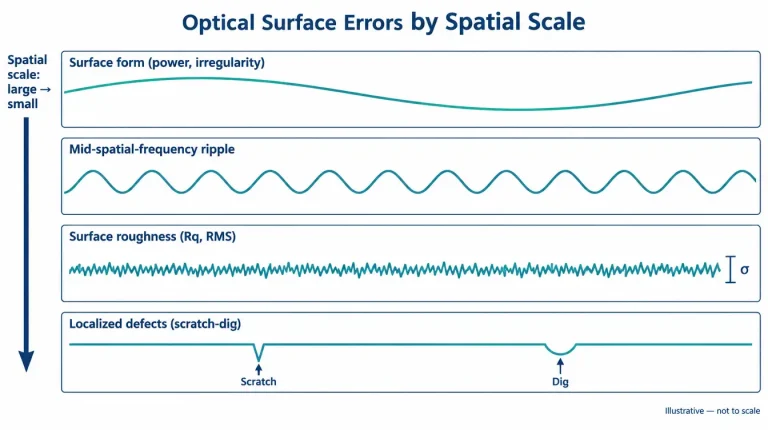
Scratch-Dig vs Surface Roughness
Scratch-dig limits discrete local defects; surface roughness is the RMS height of fine texture across the whole surface. The MIL-PRF-13830B scratch number is a visibility…
Read article
GIAI Photonics
Here we provide articles about popular science and applications of filters, lenses, prisms, reflectors, ND mirrors and other optical components. You are welcome to read! optical engineering articles, optical engineering guides, optical components, optical design, optics technology, photonics engineering
Scratch-dig limits discrete local defects; surface roughness is the RMS height of fine texture across the whole surface. The MIL-PRF-13830B scratch number is a visibility…
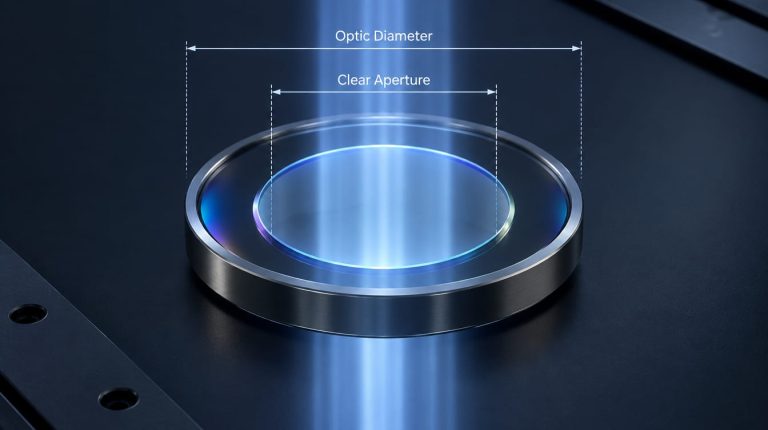
Read articleOptic diameter is the physical outside diameter of a circular optical component. Clear aperture is the region of that optic over which specified optical performance…
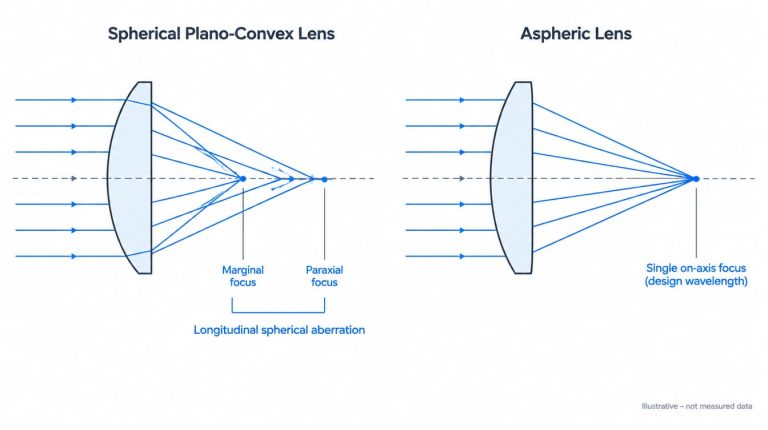
Read articleA collimated N-BK7 plano-convex lens with f = 50 mm reaches the 0.07 λ RMS diffraction limit at f/6.4 (computed, 587.6 nm). Face the curved…
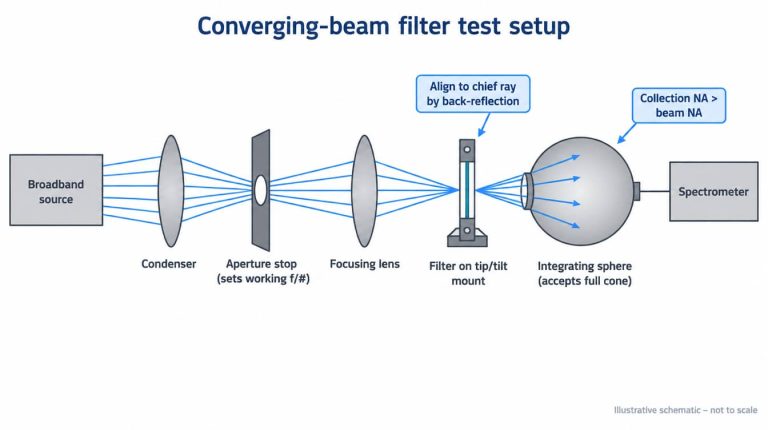
Read articleA cone half angle shifts an interference filter's spectrum toward shorter wavelengths and softens its edges; a pure tilt only shifts it. With the chief…
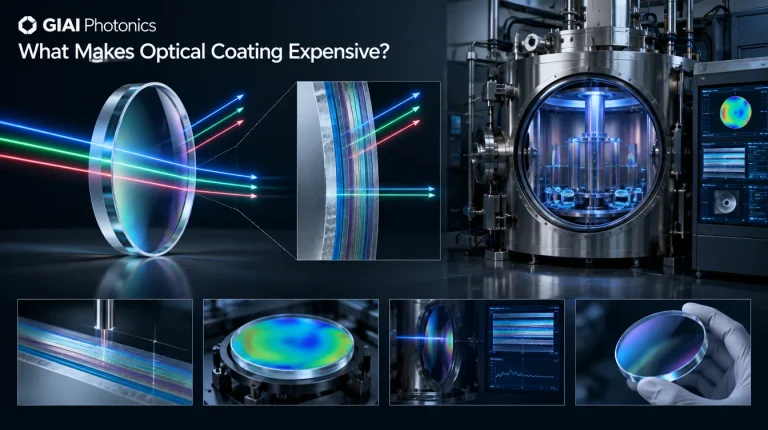
Read articleTwo optical components can look almost identical, use the same substrate material, and have similar dimensions—yet their coating costs may be very different. The reason…
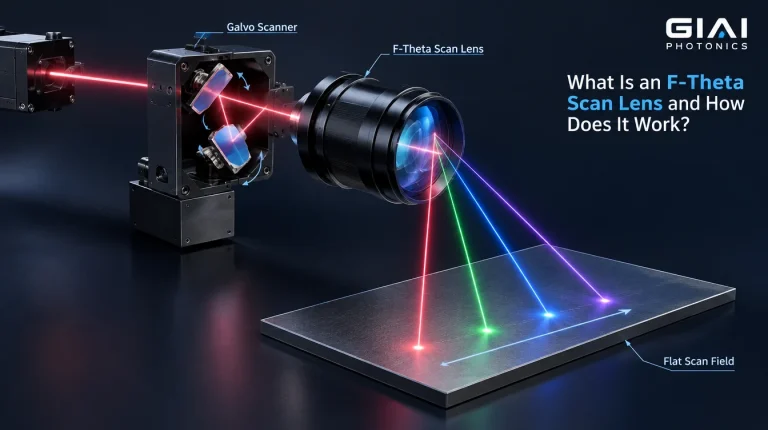
Read articleThe topic is suitable as a foundational definition page. GIAI already has more specific content covering 1064 nm F-theta lenses, field-size calculation, standard vs. telecentric…
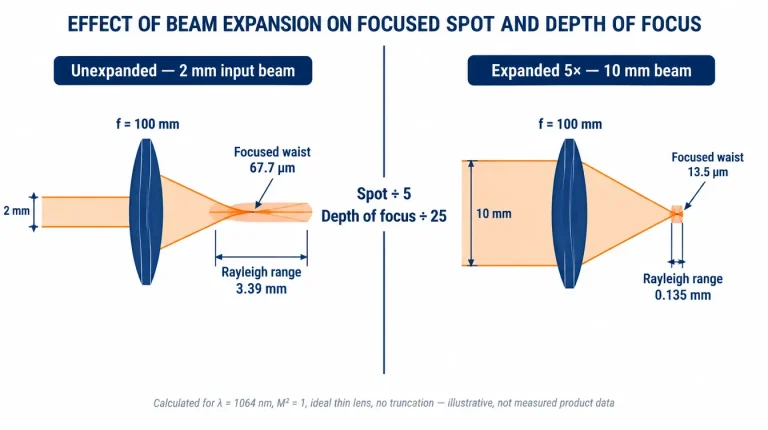
Read articleA beam expander is an afocal telescope that scales a collimated beam diameter by M. Far-field divergence scales by 1/M; the diameter-angle product stays fixed…
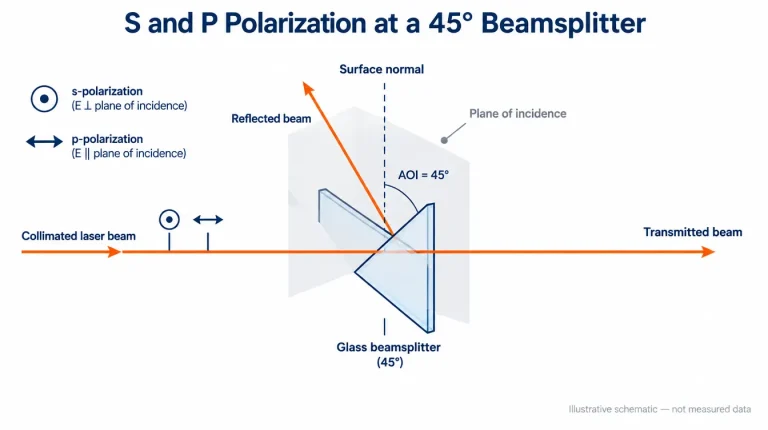
Read articleA beamsplitter does not treat s- and p-polarized light the same way. At any angle other than normal incidence, the reflectance of a surface or…
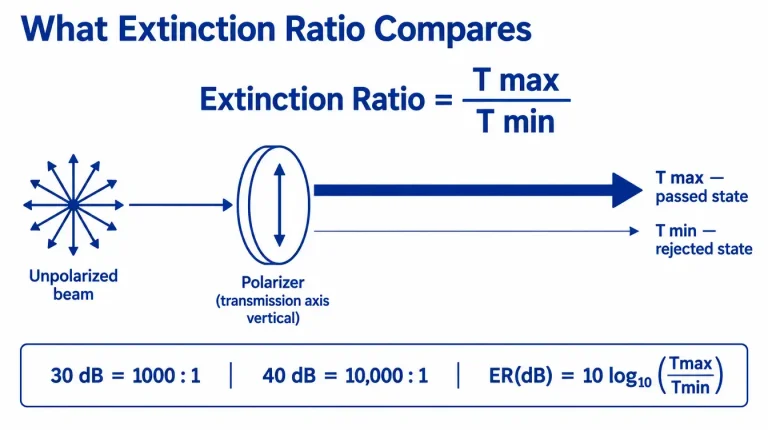
Read articleExtinction ratio is the ratio between the transmittance a polarizer gives to the polarization state it passes and the transmittance it gives to the orthogonal…
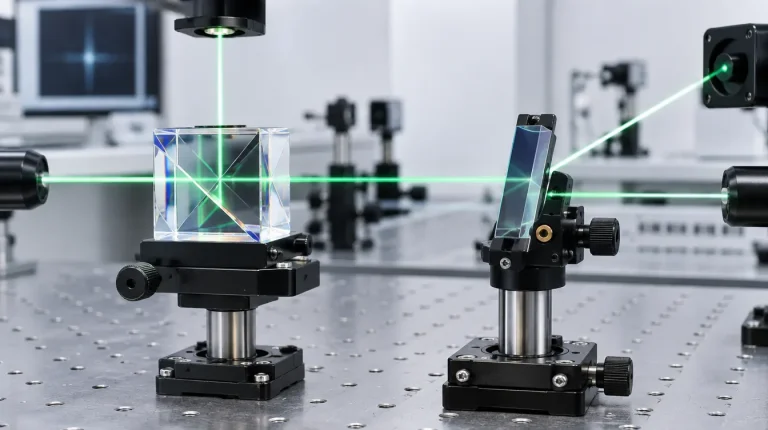
Read articleCube Beamsplitter vs Plate Beamsplitter: Which Design Is Better for Your Optical System? Neither a cube beamsplitter nor a plate beamsplitter is universally better. A…
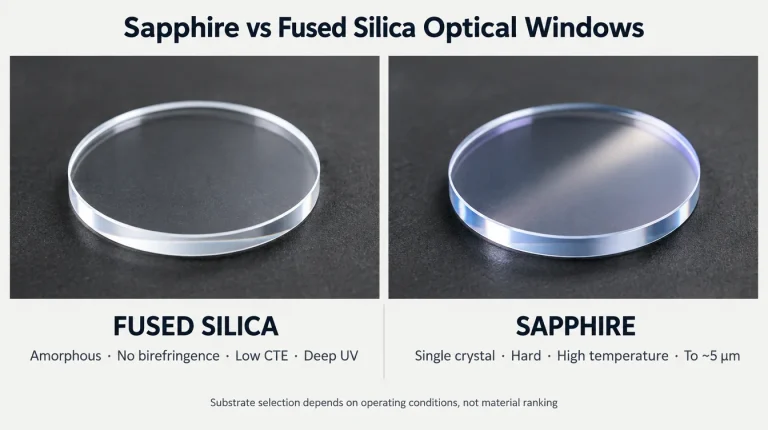
Read articleChoose fused silica when the window must work in the deep UV, must not disturb polarization or wavefront, or must survive fast thermal transients; choose…
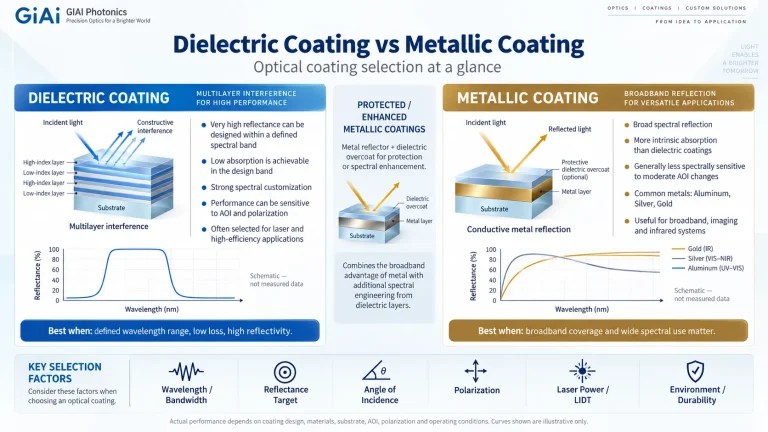
Read articleWhen specifying a mirror, beamsplitter, filter, or other coated optical component, choosing between a dielectric coating and a metallic coating is not simply a question…
Read article